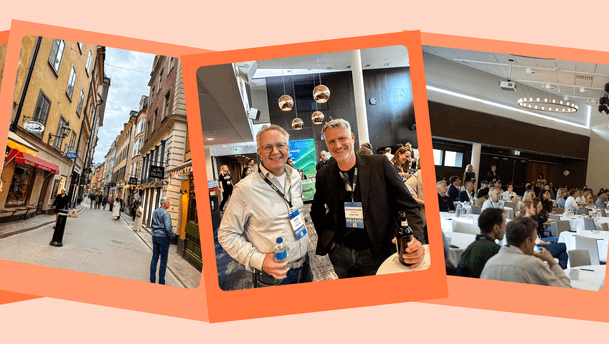


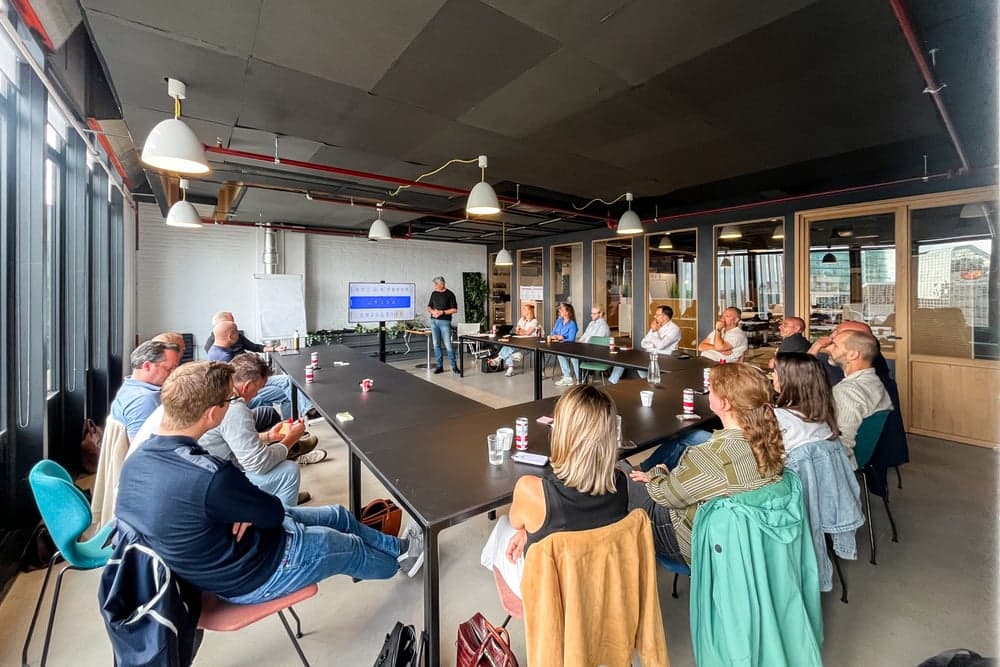
Last week, members of the ShoppingTomorrow expert group gathered at Prepr in Utrecht for the fourth session of the year. The topic of the afternoon was content in the B2B buyer journey, explored through a presentation, group discussions, and practical exercises.
ShoppingTomorrow brings together professionals from different organisations to exchange knowledge and investigate developments in digital commerce. Within the expert groups, participants work on shared challenges, discuss emerging trends, and translate ideas into practical insights.
With around 20 participants in the room, Session 4 focused on a question that many organisations are currently facing: how do you organise content in a way that supports both today's buyer journey and the growing role of AI in customer interactions?

What is ShoppingTomorrow?
ShoppingTomorrow is a Dutch research and knowledge platform that has been bringing together professionals from across the digital commerce sector since 2013. Supported by more than twenty industry and trade associations, it brings professionals together in expert groups that meet throughout the year to explore specific topics and develop practical insights for the wider market.
As an active participant in ShoppingTomorrow, Prepr is proud to contribute to these conversations and host sessions that bring together expertise from across the market.
Last week, around 20 members of the expert group gathered at Prepr in Utrecht for Session 4 of the programme. Following a short introduction by Jouko Huismans, CEO of Prepr, moderator Chantal Sukel guided participants into the main topic before Bernard Jan Boekholt, CXO at Prepr, introduced a framework for understanding content in the B2B buyer journey that would shape the discussions and group exercises throughout the afternoon.
Content is no longer enough
One of the central themes of the session was the changing role of content in the B2B buyer journey.
For years, marketers have focused on delivering the right message, to the right person, at the right moment and through the right channel. While that principle remains relevant, the discussion explored a new challenge: the content needed to support those journeys is often scattered across emails, presentations, spreadsheets, manuals and business systems. As organisations grow, content becomes fragmented and difficult to manage consistently.
The rise of AI adds a new dimension to that challenge. New technologies make it possible to surface information more quickly and support buyers across a growing number of touchpoints. At the same time, they reveal how dependent those systems are on the quality of the information behind them. When content is fragmented, incomplete, or difficult to find, the results are often fragmented too.
That relationship between AI and information became a recurring theme throughout the session. While AI can help organisations find, organise, and deliver information more effectively, its value depends heavily on the quality of the context it receives. When information is scattered across systems or lacks structure, the limitations quickly become visible in the output.
The discussion therefore moved beyond content itself and towards the information surrounding it. Understanding who a customer is, where they are in the buying journey, and which business objective is being pursued gives information meaning and relevance. Without that context, even accurate content becomes much harder to use effectively.
That idea led to a reconsideration of one of marketing's most familiar expressions. In 1996, Microsoft founder Bill Gates famously wrote that "Content is King", arguing that content would become one of the internet's most valuable assets. Nearly thirty years later, nobody in the room seemed ready to disagree with him. The discussion simply added another layer to the idea. Content remains essential, but without context it becomes much harder to connect information, people and technology in a meaningful way.
Customer context and organisational context
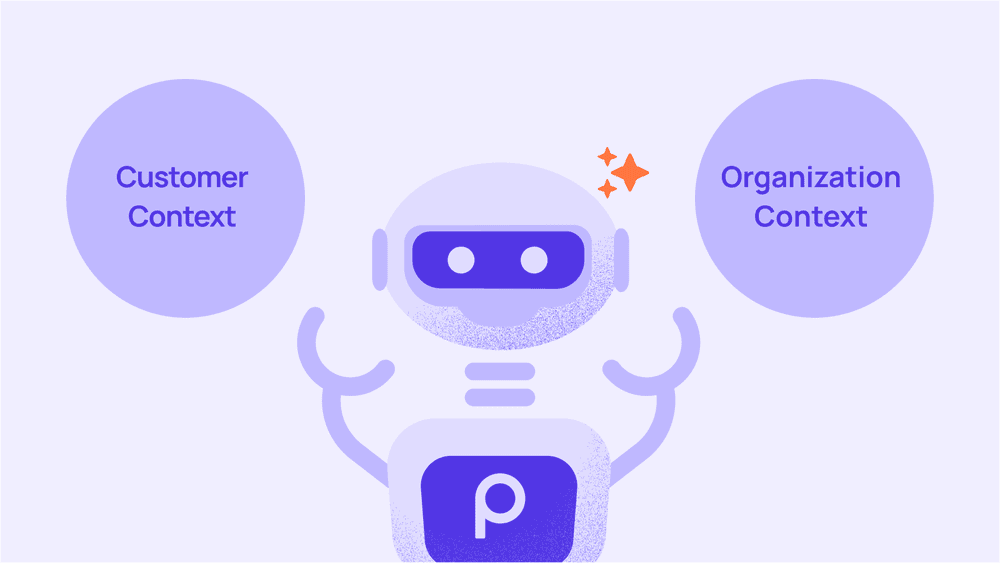
If context was one of the key words of the afternoon, the next question was what that context actually consists of.
The presentation made a distinction between two dimensions. On one side is customer context: an understanding of who the buyer is, where they are in the buying journey, and what information is relevant to them at a particular moment. On the other side is organisational context: the knowledge a company holds about its products, services, expertise, customer cases, and the problems it helps solve.
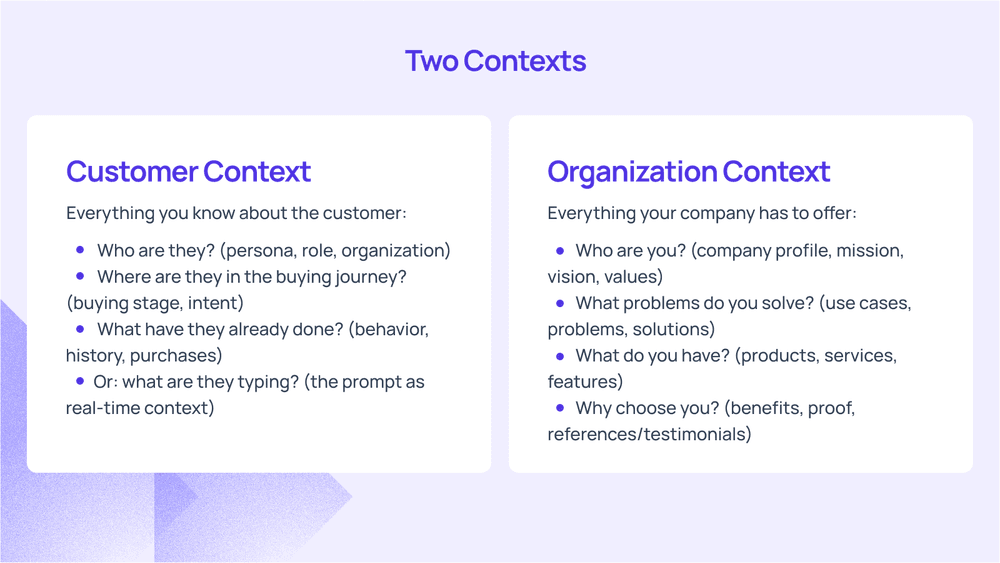
Neither exists in isolation. A deep understanding of customers has limited value if the organisation's knowledge is difficult to access or use. Likewise, even the most comprehensive product information becomes less effective when it is disconnected from the needs and intentions of the buyer.
Bringing those two contexts together was presented as one of the key challenges for organisations looking to improve the buyer journey in the years ahead.
Challenging assumptions
After the presentation, the moderator split participants into smaller groups and invited them to reflect on a number of statements related to content, AI, and the future of the B2B buyer journey.
Working in teams of four, each group discussed its position, challenged assumptions and translated its conclusions into a visual summary on a flip-over sheet. The exercise encouraged participants to connect the themes of the presentation to their own organisations and day-to-day challenges, moving the conversation from theory to practice.

Two statements generated particularly lively conversations:
- Within three years, an AI agent acting as an account manager will be a normal touchpoint in the B2B buyer journey.
- It is better to start feeding AI with imperfect content today than to wait for fully validated content tomorrow.
Neither statement offered an easy answer. Instead, they prompted participants to weigh the opportunities against the risks and consider how prepared their organisations are for the changes already taking place.
The discussions revealed different perspectives, but also a shared recognition that content, context, and technology can no longer be treated as separate topics. Decisions made today about how information is created, organised, and maintained will increasingly influence how organisations engage with customers in the future.
Continuing the conversation over dinner
The group gathered on the second floor of the Prepr office for a shared Vietnamese dinner. The menu was entirely vegan, reflecting a practice that is already familiar within Prepr, where vegan lunches are part of the company culture.

The change of setting did little to slow down the conversations. Ideas from the afternoon resurfaced over dinner, alongside discussions about challenges, experiences and opportunities within participants' own organisations. Long after the formal programme had ended, small groups were still exchanging perspectives and continuing the conversation.
A question of context
As the discussions unfolded, it became clear that content itself was never really the issue. Most organisations already possess an abundance of knowledge, expertise, and information. The challenge lies in bringing those pieces together in a way that supports buyers throughout their journey and remains useful across an increasingly complex mix of channels and touchpoints.
Questions about customer journeys, internal processes and emerging technologies all seemed to lead back to the same underlying theme: not the availability of information, but the ability to connect it, maintain it and make it meaningful in a specific context.
ShoppingTomorrow sessions are designed to explore questions rather than provide definitive answers. Session 4 was no exception. What it did offer was a shared opportunity to examine how content, context and technology are becoming increasingly connected, and what that means for the future of the B2B buyer journey.