Some work trips you come back from and quickly forget. This wasn't one of them.
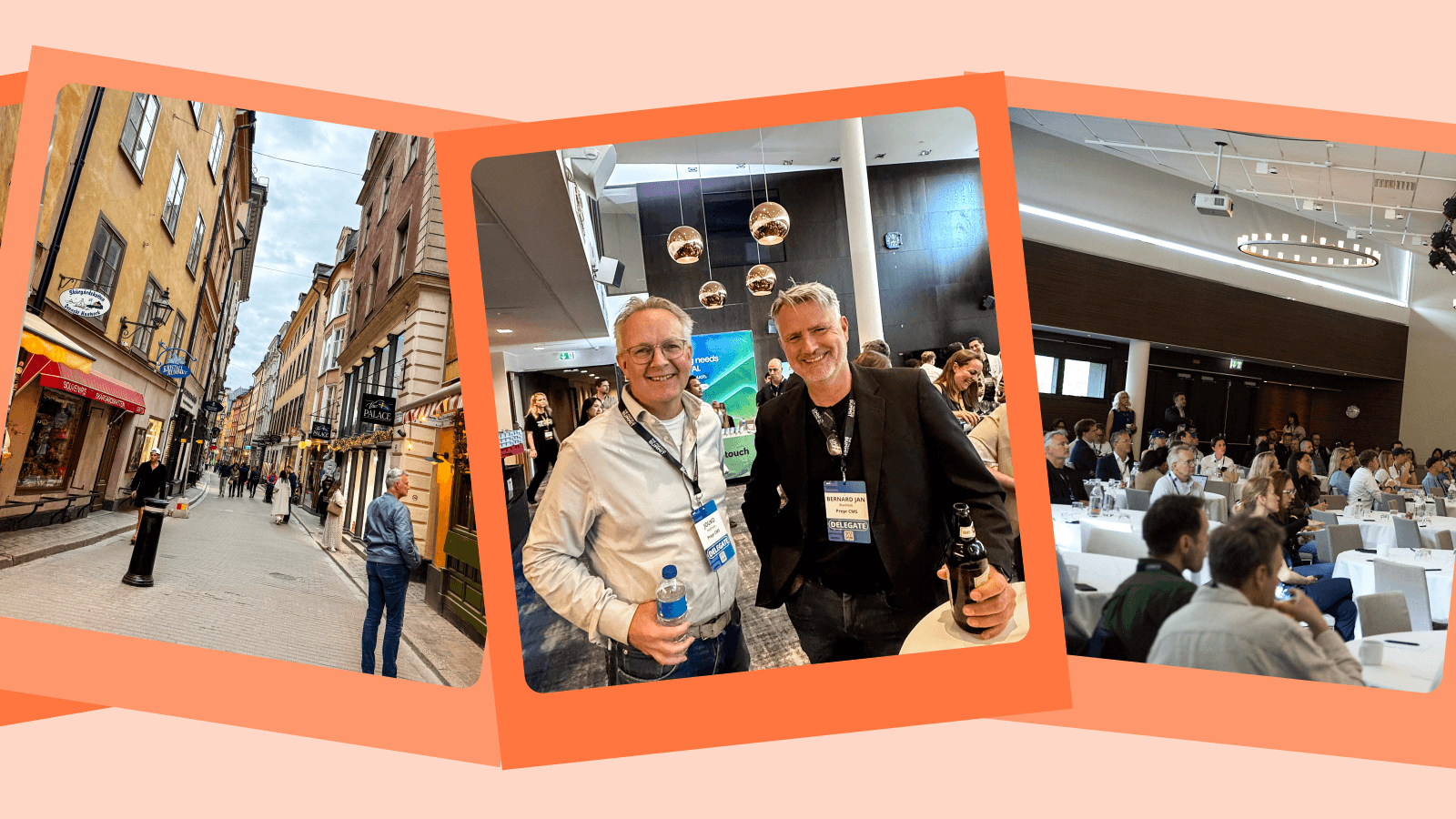
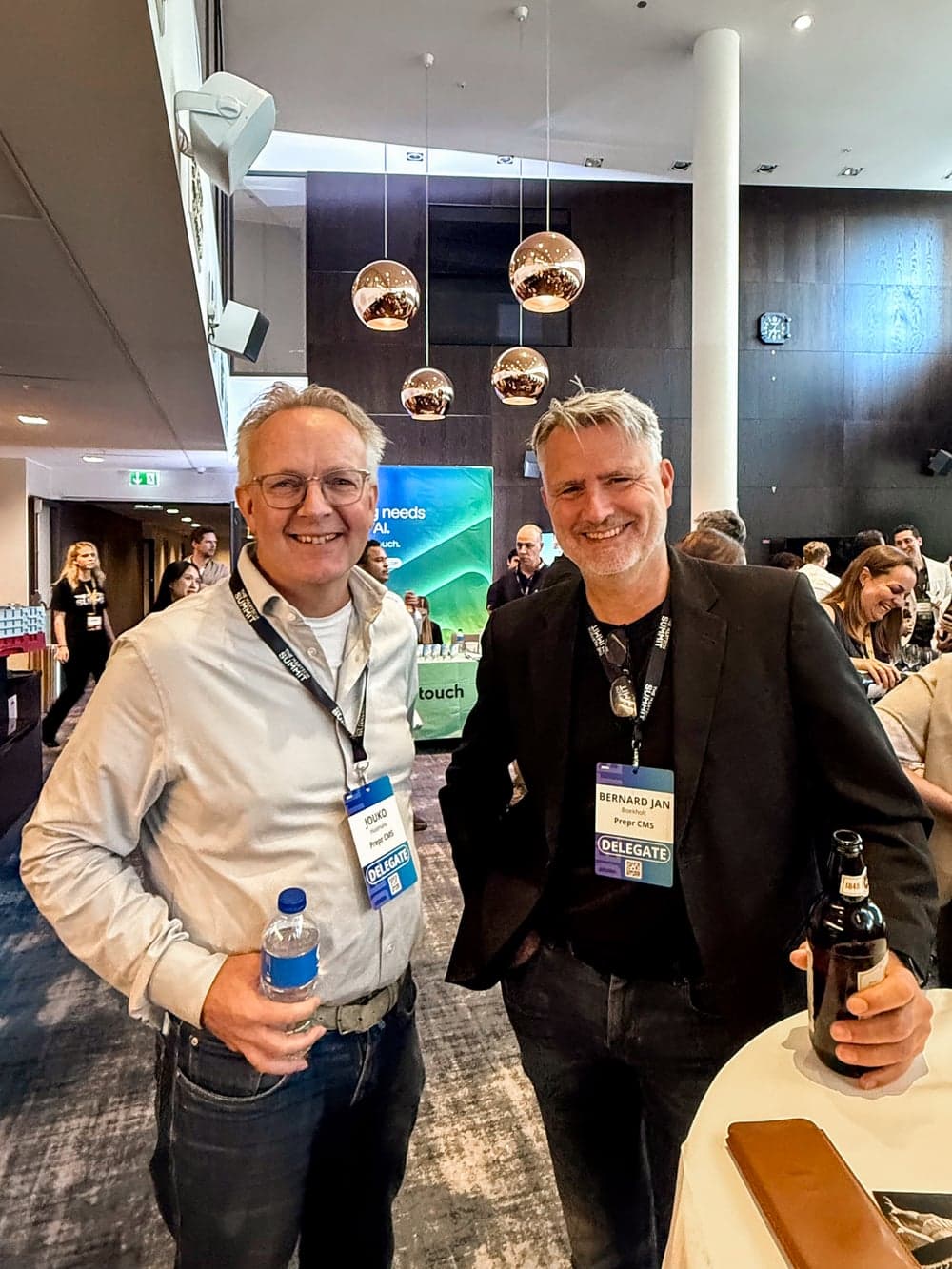
On 25 May, Prepr CEO Jouko Huismans and CXO Bernard Jan Boekholt travelled to Stockholm for the first edition of the MarTech Summit Stockholm, which brought together 200+ senior marketers, digital leaders, and technology specialists from across the Nordics and Europe. Three days later, they returned to Utrecht with new connections, fresh perspectives, and a few ideas they're still thinking about.
But the summit wasn't the only item on the agenda.
As Prepr continues to explore opportunities in the Nordic market, the visit was also a chance to meet local agencies, have honest conversations, and understand firsthand how Swedish digital teams are approaching customer experience, personalization, and the growing role of AI.
Day one: the easiest trip we've had in a while
The trip got off to an unusually smooth start.
No security queues, no delays, smooth arrival at Stockholm Arlanda, and the final stretch into the city on a Lime scooter turned out to be faster and cheaper than the bus or metro. And honestly, more fun.
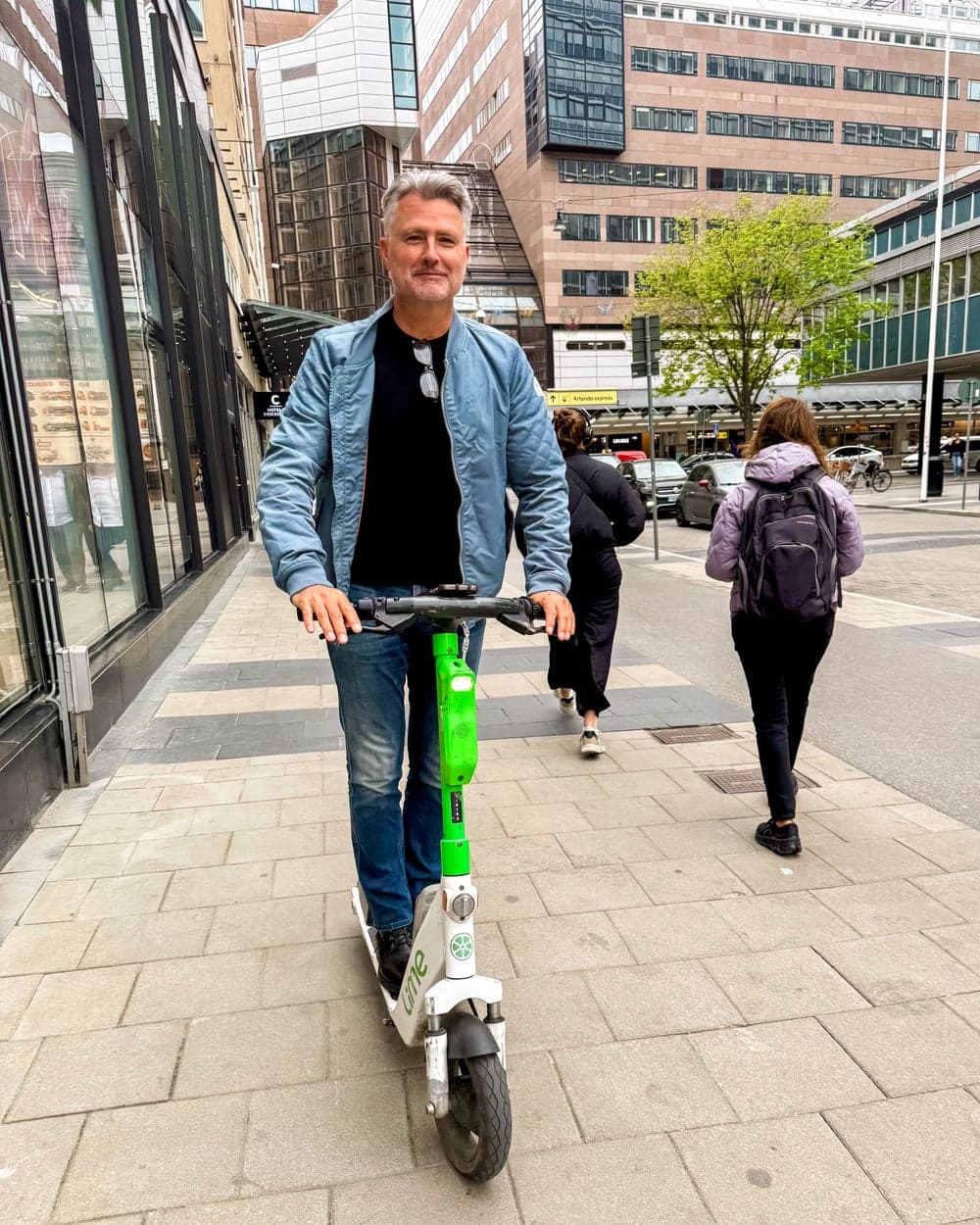
It's not exactly the kind of thing people travel across Europe to write about. But there's something about a trip that just works that puts you in exactly the right headspace for what comes next.
Stockholm made a good first impression.
Coming from the Netherlands, both Jouko and Bernard Jan immediately noticed how familiar the city felt. The culture, the directness, the practicality. There was a sense of order to everything, though perhaps a little more than they were used to at home.
As Bernard Jan put it: "Sweden feels like the Netherlands, but more organised. Which is a high bar. Somehow they cleared it."
The rest of the day was intentionally relaxed. There was time to settle in, catch up on work, explore parts of the city, and prepare for the summit the next morning.
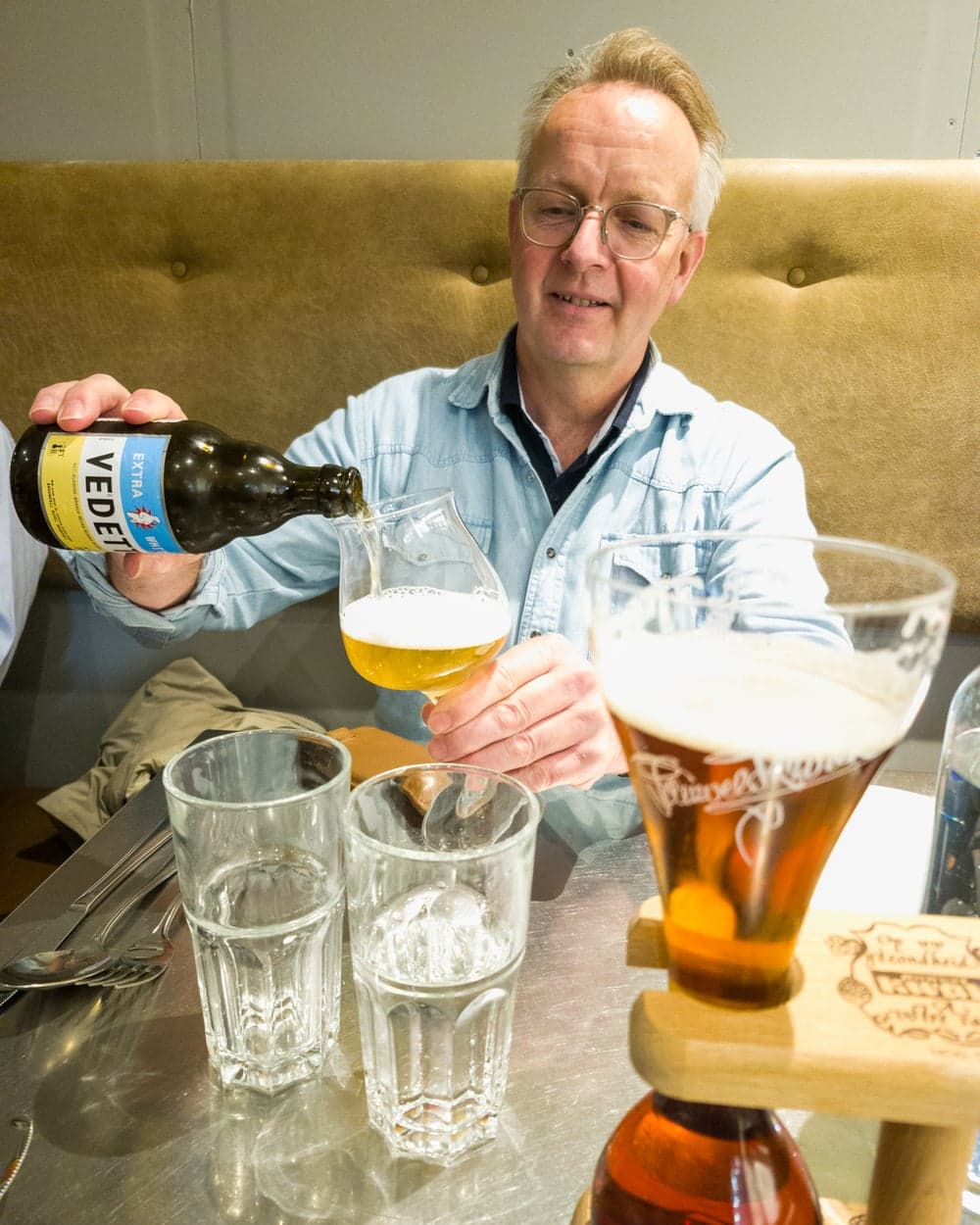
And dinner? At a Belgian restaurant. Because apparently, some things are universal.
Day two: Inside the MarTech Summit
The next morning, it was time for the main event.
As marketers, digital leaders, and technology specialists gathered in Stockholm, one topic quickly emerged as the centre of almost every conversation: AI.
Every keynote, every panel, every hallway exchange touched it in some way. But what was actually interesting wasn't the volume of AI talk; it was how differently everyone interpreted it. Content generation, analytics, optimization, autonomous agents, automation, and personalization engines. Same word, completely different problems, completely different mental models.
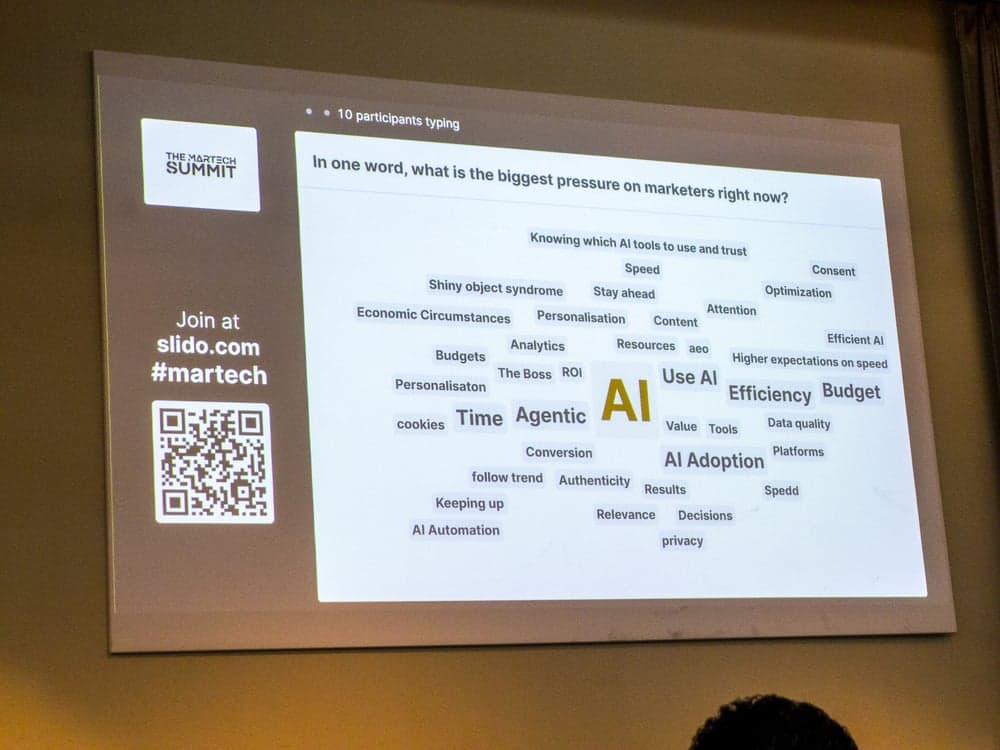
That observation stayed with Bernard Jan throughout the summit. "What struck me most wasn't the amount of AI talk, but how differently everyone interprets it,” he says. "Every speaker approached AI through their own lens. Same topic, very different conversations."
The conversations revealed an industry that is still very much in motion. Organizations are experimenting, testing ideas, and trying to understand what AI means for their specific customers, teams, and business models.
Two sessions worth unpacking
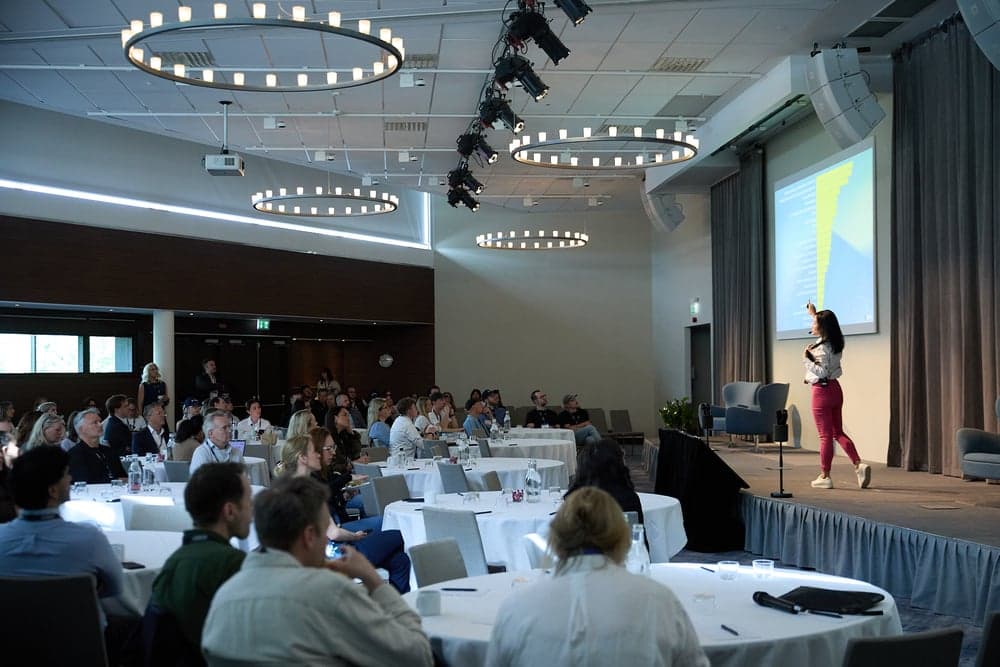
While AI dominated the agenda, another theme kept surfacing throughout the day: the foundation behind AI.
Different speakers approached it from different angles, but many arrived at the same conclusion: AI is only as valuable as the information, structure, and understanding behind it.
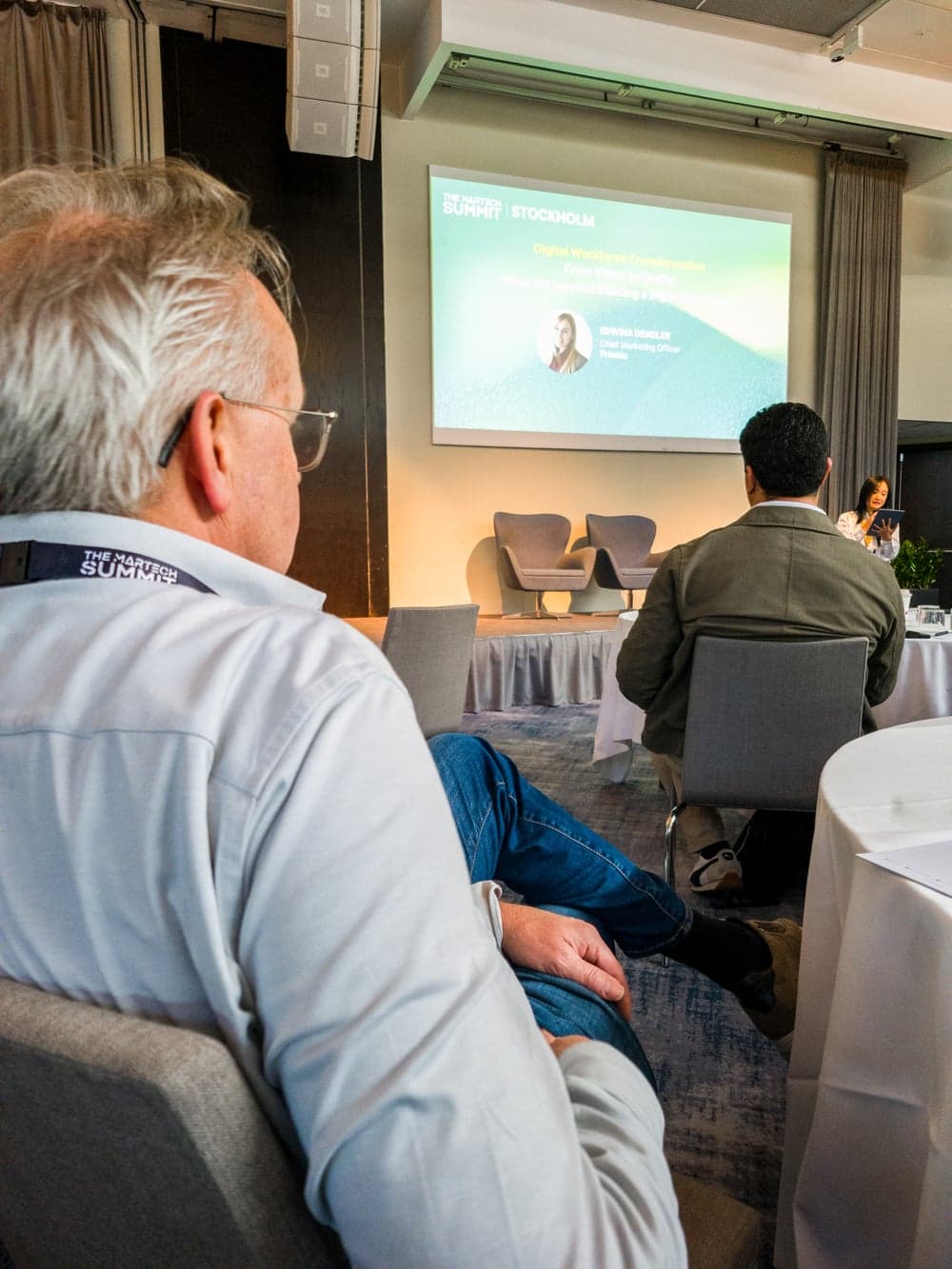
One of the sessions that resonated most with Jouko was presented by Murray Wright, Senior Manager of Customer Success EMEA at Customer.io. He described the shift from AI as a productivity tool to AI as an intelligence tool.
Today, most organizations are still using AI to work faster. They're generating content, automating repetitive tasks, optimizing campaigns, and experimenting with new workflows. The next stage, Wright argued, will be much bigger: hyper-personalized experiences, predictive optimization, dynamic customer journeys, and systems capable of making increasingly intelligent decisions.
But getting there requires something many organizations are still building.
"The teams getting the most from AI right now aren't necessarily the most sophisticated technically," says Jouko. "The ones seeing real results have invested in creating the right conditions first. They have reliable context, better governance, and a clearer understanding of their data."
That same message surfaced elsewhere during the summit. Hanna Ashby Öhman, Head of CRM & Marketing Automation at Avanza Bank, highlighted the growing importance of first-party data in an AI-driven world. If the underlying data isn't accurate and trustworthy, the output won't be either.
Taken together, the message was hard to miss. The conversation around AI often focuses on the technology itself. In Stockholm, many of the most valuable discussions focused on the foundations beneath it: content, data quality, governance, and customer understanding.
AI may be moving quickly, but the organizations getting the most value from it are still doing the hard work first.
Beyond the summit: The conversations between the sessions
The summit may have been the reason for the trip, but some of the most valuable conversations happened outside the conference venue.
During their time in Stockholm, Jouko and Bernard Jan met with several digital agencies to exchange ideas, explore potential partnerships, and better understand the local market. Those discussions offered a different perspective from the keynote sessions and panel debates.
The Swedish market isn't as different from the Dutch one as the geography might suggest. "More similarities than differences," as Jouko described it. "The way they work, the way they talk about their tech stack, what's happening with the customer, it's almost the same mental model we see in the Benelux. Swedish and Dutch markets operate within the same Northwest European frame: pragmatic, forward-thinking, open to collaboration."
The cultural dimension of AI adoption came up in this context, too. Jouko observed that Benelux and the Nordics are among the more advanced regions globally in terms of openness to AI, on par with the US, but for cultural rather than purely technological reasons.
Collaborative mindsets, willingness to experiment, and tolerance for iterating in public. That cultural readiness is underrated in most AI adoption conversations, which tend to focus on tools and infrastructure while ignoring the human side of change.
For Prepr, those meetings were an important reminder that entering a new market isn't just about finding opportunities. It's about building relationships and finding people who share a similar way of thinking.
By the end of the trip, Sweden felt less like a new market and more like the beginning of an ongoing conversation.
Day three: working, wandering, and the Arlanda Express
The final morning started with another agency meeting in the city centre, one of those conversations that gives you energy long after it ends. A few hours of focused work at United Spaces followed, then lunch at Hötorgshallen, a stop at House of Candy for Swedish sweets, and the Arlanda Express back to the airport.

The Arlanda Express genuinely deserves a mention. Jouko called it one of the best public transport experiences he's had. Smooth, fast, exactly what it promises to be. Stockholm is consistent like that.
The weather at Arlanda, however? Pure Netherlands. Some things follow you home.

What we're bringing back
Three things, in plain terms.
The content foundation comes before the AI layer, not after. AI doesn't create the conditions for personalization. Structured content, clean first-party data, audience clarity, and brand governance do. AI amplifies what's already there. If what's there isn't solid, AI makes that more visible, not less.
The trip also reinforced something else: the industry is still learning. Despite all the excitement around AI, there is no established playbook yet. Organizations are experimenting, testing ideas, and figuring out what works.
And then there was Sweden itself.
The conversations with agencies confirmed that the Nordic market is much closer to the Benelux than the geography suggests. The mindset is familiar: pragmatic, collaborative, and forward-looking. The challenges are similar, and so are many of the opportunities.
One last thing Bernard Jan noted on the way back: the best experiences of the trip were the ones that removed friction. The scooter. The smooth arrival. The Arlanda Express. Even the conversations that felt less like meetings and more like an exchange of ideas.
There's a version of that insight that applies to everything we're building at Prepr. The goal isn't to add capability. It's to remove the friction that stands between good content and the people it's meant for.
We'll be back in Stockholm soon.
Tack, Stockholm. 🇸🇪