We believe impact is what turns content into business value. And a page only creates impact if it actually speaks to the person looking at it.
Why relevance has become harder to deliver
Most of your B2B traffic is anonymous. So how do you know what's most relevant to show them? You don't know where they're from, what industry they're in, or what would actually move them forward. Most of the visitors driving that decision are still, functionally, strangers.
Even once that's solved, there's a second problem right behind it. Tweaking personalization or setting up a new page usually still means briefing a developer and waiting.
The scale of that second gap shows up in the research, even if it comes from more than one place. In Salesforce's State of Marketing 2026 report, 78% of marketers worldwide say they need more personalized content than they're actually able to produce. Separately, a survey by StackAdapt found close to half of brand and agency marketers point to fragmented systems and limited platform integrations as their biggest obstacle to personalization at scale, a different survey pointing at a similar kind of bottleneck.
That fragmentation costs real time. Research from Marq found that 32% of content requests take longer than a week to fulfill, and that's before a request needs a developer to actually build it. A signal that takes weeks to act on is no longer relevant.
The idea is right. It just doesn't ship in time to matter for the visitors on the site today.
There is a better way
That's why we decided to team up with Leadinfo, the European B2B platform that identifies the companies visiting a website, cookielessly, and helps marketing and sales teams turn that traffic into qualified pipeline. Founded in Rotterdam in 2017, it's built a database covering more than 220 million companies across 195+ countries. That reach is what makes the signal usable: identification typically resolves for 35 to 40% of a site's traffic, enabling personalization to work consistently. Learn more at Leadinfo.
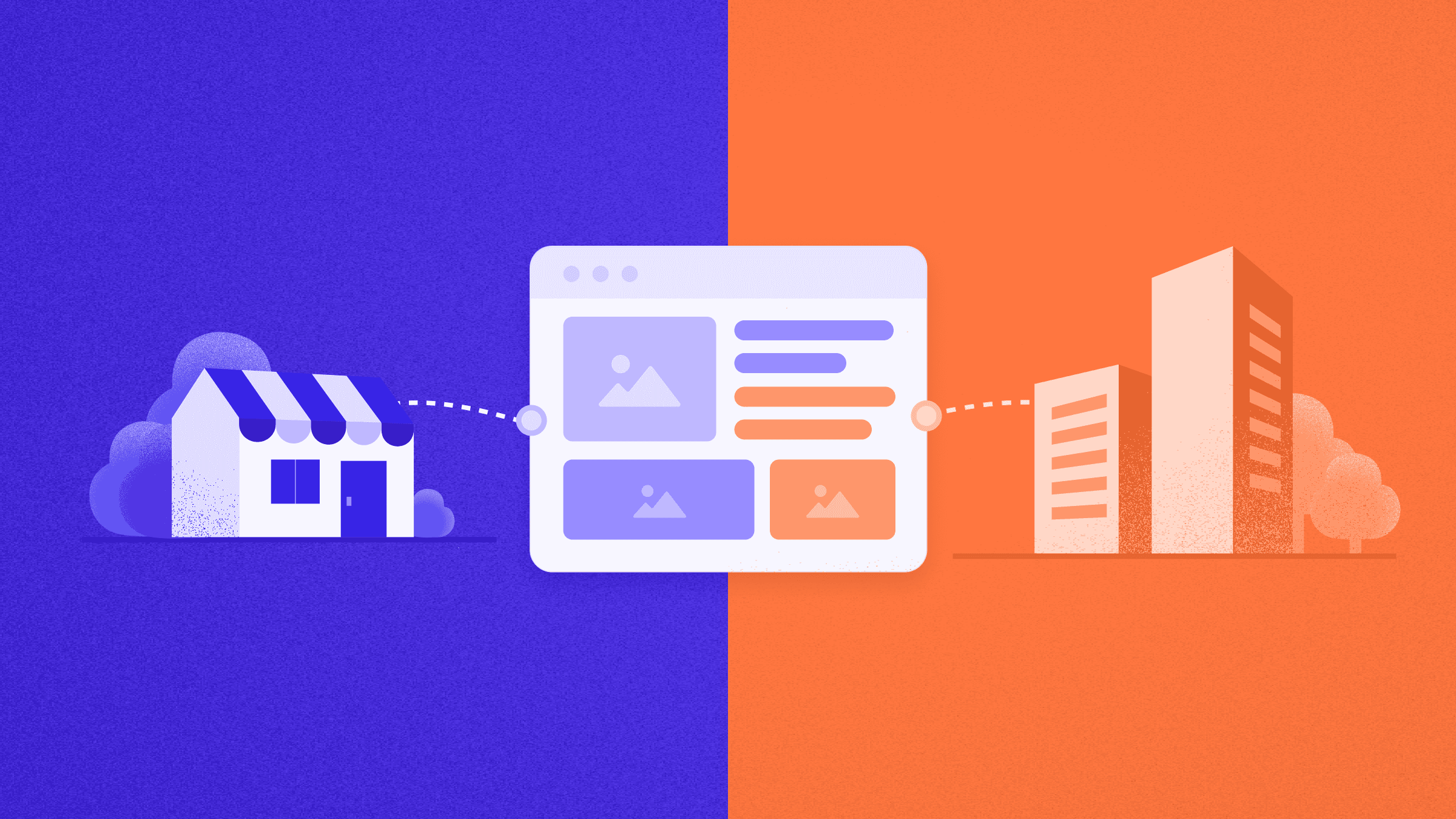
We built this integration to take that signal and put it straight to work inside Prepr. Once a company is identified, the hero section, featured content, proof points, and CTAs can all be personalized to their industry or size, in real time.
Instead of adding another tool that sits between the visitor and the page, we built this into the content layer itself, so identification and personalization work as one motion inside Prepr instead of two disconnected systems.
Knowing which company is on your site is valuable on its own. But if that signal ends up in a dashboard while every visitor still sees exactly the same homepage, you're only using half of its potential.
With this integration, once a company is identified, marketers can use that signal to serve more relevant content directly in Prepr: different messaging, a relevant case study, a different call to action. And they can do it without asking a developer to build another integration or launch another campaign.
This is where personalization becomes interesting to us. It's not about collecting more data or adding more tools to the stack. It's about shortening the distance between what you know about a visitor and what that visitor actually experiences.
Now that you know who's looking at your website, why would you still show them the same thing as everyone else?
How the integration works
The integration connects your website visitor data directly with Prepr. Once connected, company data like industry and employee count flows straight into your workspace. Editors define which content fits which segment once, and from there Prepr personalizes automatically: a manufacturer sees the manufacturing story, an enterprise buyer sees enterprise-level proof, with no manual work per visit.
Because the personalization happens inside Prepr's own content layer instead of through a bolted-on third-party tool, there's no second system sitting between the visitor and the page. Pages load without flicker, with no extra strain on page speed or Core Web Vitals.
Privacy-first by design
Both companies are European and privacy-first by design: Prepr's data stays in Europe, is first-party data, and complies with GDPR guidelines; Leadinfo identifies companies without cookies or fingerprinting and stores no personal data.
Getting it running in your workspace
Setting this up doesn't take a developer. There are two short steps, both inside Prepr.
- Activate the integration. Log in to your Prepr account, click the integrations icon, and choose Integrations to see everything available. Find the card for company identification and click Activate. If you don't have access yet, click Try for free for 30 days, or contact our Sales team to activate it for longer. See the Leadinfo integration guide for full setup details.
- Connect your account. Activating the integration will guide you through connecting your existing account. Grant Prepr the permissions it needs, and you're set.
That's it, the integration is live. From here, marketers can create segments in Prepr using the industries and company sizes that surface.
That's exactly why we're excited about this integration. It gives you the power to personalize without the complexity: no new system to learn, no developer dependency, no compromise on privacy. A modern headless CMS shouldn't just manage content. It should help teams use the signals they already have to make that content more relevant, at the moment it matters. That's what we're building towards with Prepr.
The generic B2B homepage was never a strategy. It was a limitation nobody had gotten around to fixing. We can't wait to see what teams build now that it isn't one.