
We’re not going to warm you up with fluffy metaphors.
Let’s go straight to the point: if you want higher conversions, stop obsessing over small design tweaks and start personalizing.
Conversions don’t slow down because your buttons aren’t blue enough. They slow down because your visitors don’t see content that actually speaks to them.
Do I have your attention now?
Good. Because you’ve only got about 15 seconds of theirs. That’s how long it takes for a visitor to decide whether to stay or leave. And if your site isn’t relevant from the first click, they’re gone.
Improving conversion rates is one of the toughest challenges for any digital team. Every visitor you attract to your website represents time, effort, and cost, whether through advertising, SEO, or campaigns. Yet too often, most of those visitors leave without taking action. Marketing teams typically respond with incremental optimizations: swapping button colors, testing headlines, or redesigning landing pages. It helps, but only for a while.
The bigger opportunity lies in personalization. Instead of treating every visitor the same, personalization tailors the experience to the individual.
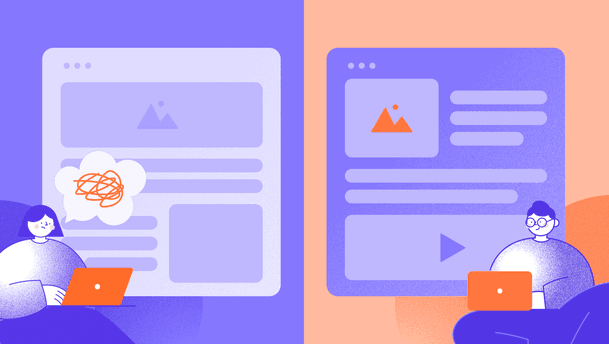
A new visitor looking for product education should not be shown the same content as a returning prospect who has already compared pricing. By recognizing intent and adapting in real time, personalization ensures visitors get what they need to move forward, resulting in higher engagement and more conversions.
Prepr was built as a data-driven headless CMS that helps teams move beyond static websites and deliver personalized, conversion-focused experiences. And with Prepr, you don’t need heavy external tools or complex integrations to make it work. Personalization is built in, so you can start small, scale fast, and see measurable results.
Why personalization drives conversion
Personalization works because relevance drives action.
Visitors who recognize that a website “understands” them are more likely to keep engaging. They’re looking for answers to their specific questions: What does this product do? How can it help me? Is it right for me? If your content speaks directly to those questions, visitors are far more likely to keep engaging and eventually convert. If it doesn’t, they leave.
Research consistently shows that personalized experiences lead to higher engagement, more conversions, and stronger customer relationships.
According to a recent Gartner survey, customers who experience active personalization (meaning content that responds to visitor behavior, intent, or needs) are 2.3× more likely to complete important purchase decisions confidently than those who receive passive or loosely tailored content.
Other recent data supports this urgency. For example, 89% of marketers say personalization is essential for success in the next few years, and fast-growing companies derive about 40% more revenue from personalization compared to slower growers.
Think about what that looks like in practice:
- A first-time visitor may need social proof and product education.
- A returning visitor may want pricing or technical details.
- An existing customer may be interested in upsell content or advanced features.
Showing all three of these audiences the same landing page is a wasted opportunity. With personalization, you can adapt each experience in real time, ensuring that every visitor sees the content that matters most to them, at the exact moment it matters.
This kind of website personalization is becoming a standard expectation, and the right CMS for marketers makes it easy to put into practice.
Why teams hesitate to personalize
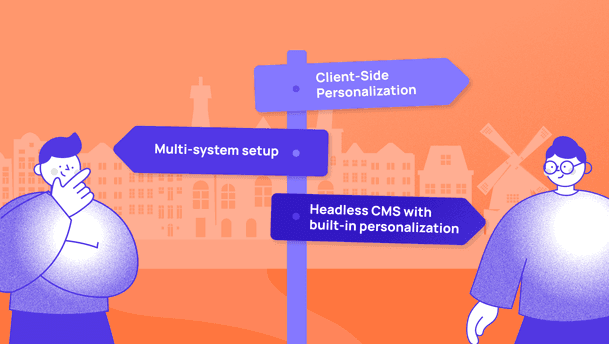
Even with all the evidence, many teams still keep personalization on the “someday” list. The hesitation usually comes down to three things: complexity, tooling, and testing.
First, complexity. Personalization has a reputation for being complicated. Teams picture huge integrations, months of developer time, and endless setup. For smaller organizations, it feels out of reach.
Second, tooling. Most CMS platforms don’t have built-in personalization features. To get started, you need external engines, extra data tools, or plugins. Every new piece adds cost and maintenance, which makes the whole project look risky before it even begins.
Finally, testing. Even when personalization is attempted, many teams struggle to show hard results. Without testing, it’s hard to know whether a tailored content block is really driving conversions or just adding noise. That uncertainty makes it difficult to get leadership buy-in or budget.
These are real challenges, but they’re also outdated assumptions.
Prepr was designed to remove them. Personalization, segmentation, and testing are not add-ons, they’re part of the CMS itself. That means you can go from idea to live personalized content without stacking tools or waiting for a major integration project. And because A/B testing is included, you can validate every personalization experiment with data.
How personalization works in Prepr
Prepr makes personalization simple by combining three building blocks: data collection, segmentation, and adaptive content, tied together with built-in testing. Together, these features let you move from static pages to dynamic, conversion-focused experiences in just a few steps.
1.Data collection
Everything starts with data collection. Prepr captures visitor behavior and context, such as page views, clicks, referral sources, or completed actions. Over time, this builds a clear picture of what your visitors are doing and what they care about. Because data collection is native to the platform, you don’t need a separate analytics or tracking tool to feed personalization.
2. Segmentation
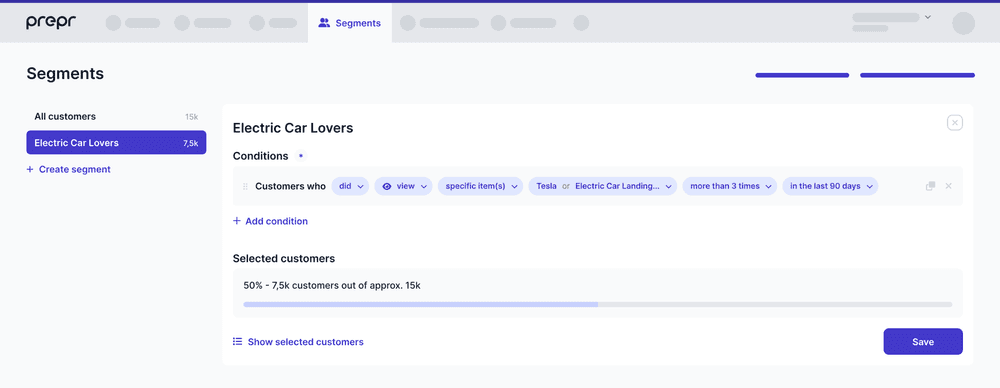
Once the data is flowing, you can group visitors into meaningful segments. These can be based on behavior (visited pricing, downloaded a resource), context (returning vs. new visitor), or customer status (trial user, subscriber, customer). Segments update automatically as visitors interact with your site, so you always deliver experiences that reflect their current journey.
3. Adaptive content
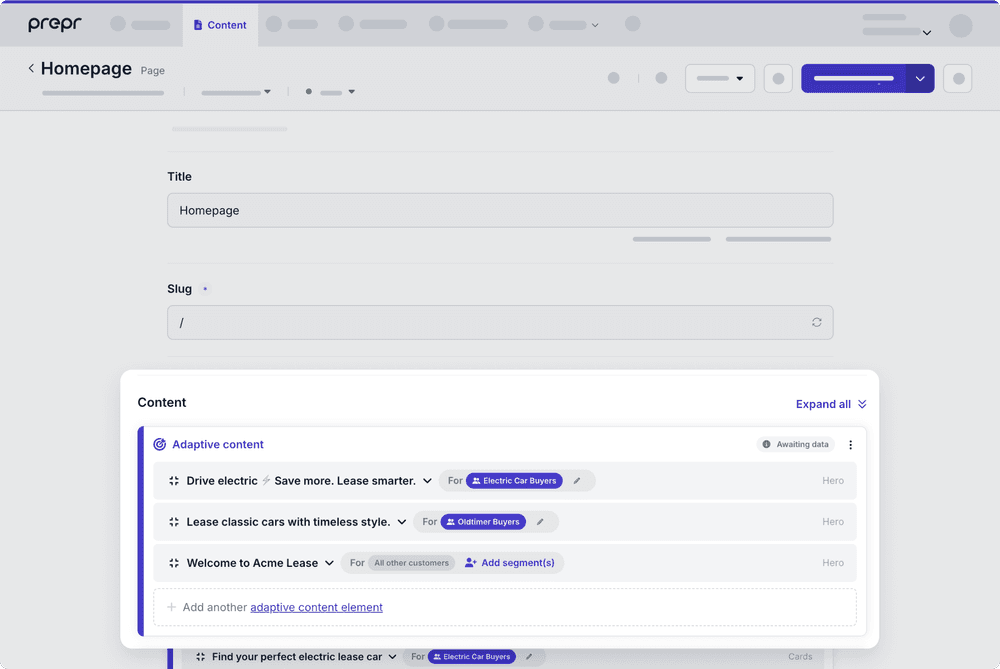
With segments in place, you can adapt your content to match each audience. That doesn’t mean building separate websites. Instead, you create flexible content that shifts depending on who’s viewing it. A first-time visitor might see educational resources, while a returning prospect sees a product comparison. This keeps your message relevant without adding complexity for your team.
4. Testing
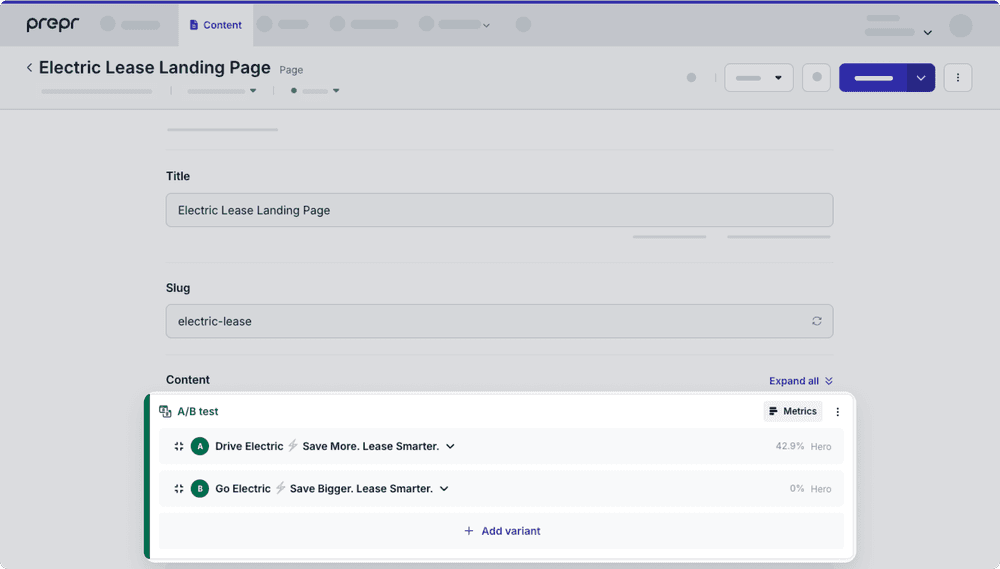
Finally, you validate what works. Prepr’s built-in A/B testing lets you measure whether your personalized content performs better than a control version. That means every experiment has data behind it, giving you clarity and confidence to scale what works.
Together, these steps turn personalization from a big, abstract idea into something concrete and actionable. You start with data, shape it into segments, deliver adaptive content, and measure impact, all within the same platform.
Measuring and validating impact
Key metrics to track go beyond surface-level engagement. Conversion rates are the obvious starting point, but it’s equally important to measure how personalization affects deeper behaviors: the number of pages viewed per session, progression through funnel stages, or even revenue per visitor in e-commerce contexts. By connecting personalization to meaningful outcomes, teams can build a clear case for expanding their strategy.
This is why Prepr is increasingly seen as a lead gen CMS: it helps marketing teams optimize landing page personalization, connect with audiences, and turn visits into conversions.
Personalization can be simple with Prepr
Boosting conversions isn’t about chasing quick wins with button colors or headline swaps. It’s about showing the right content to the right people at the right time. That’s what personalization delivers, and with Prepr, it’s built in.
Start by tracking a few behaviors, build segments that reflect your audience, and use adaptive content to make each visit more relevant. Test the impact, learn from the results, and expand step by step.
The result is a site that feels more useful to your visitors and delivers stronger outcomes for your business. Personalization doesn’t have to be complicated. It just has to be done.