A personalized homepage shaped around what visitors actually look for
DokterOnline already used Prepr as its CMS. When they first selected it two years earlier, Prepr stood out for combining content management with data, including native support for personalization. The development team had explored those features, but marketing wasn’t ready to activate them yet.
Once the team understood that engagement stayed low because the homepage treated everyone the same, personalization became the natural next step. They sat together and aligned on a simple definition that fits a medical platform: content should adapt to the topics visitors show interest in.
With that approach in place, the team activated Prepr’s personalization features and defined segments around the most important conditions on the platform, such as weight-loss, contraception, erectile dysfunction, high blood pressure, and STIs. Visitors were then grouped into these simple, behavior-based segments based on the pages they explored.
With segments in place, the team uses Prepr to adapt a few key areas of the homepage.
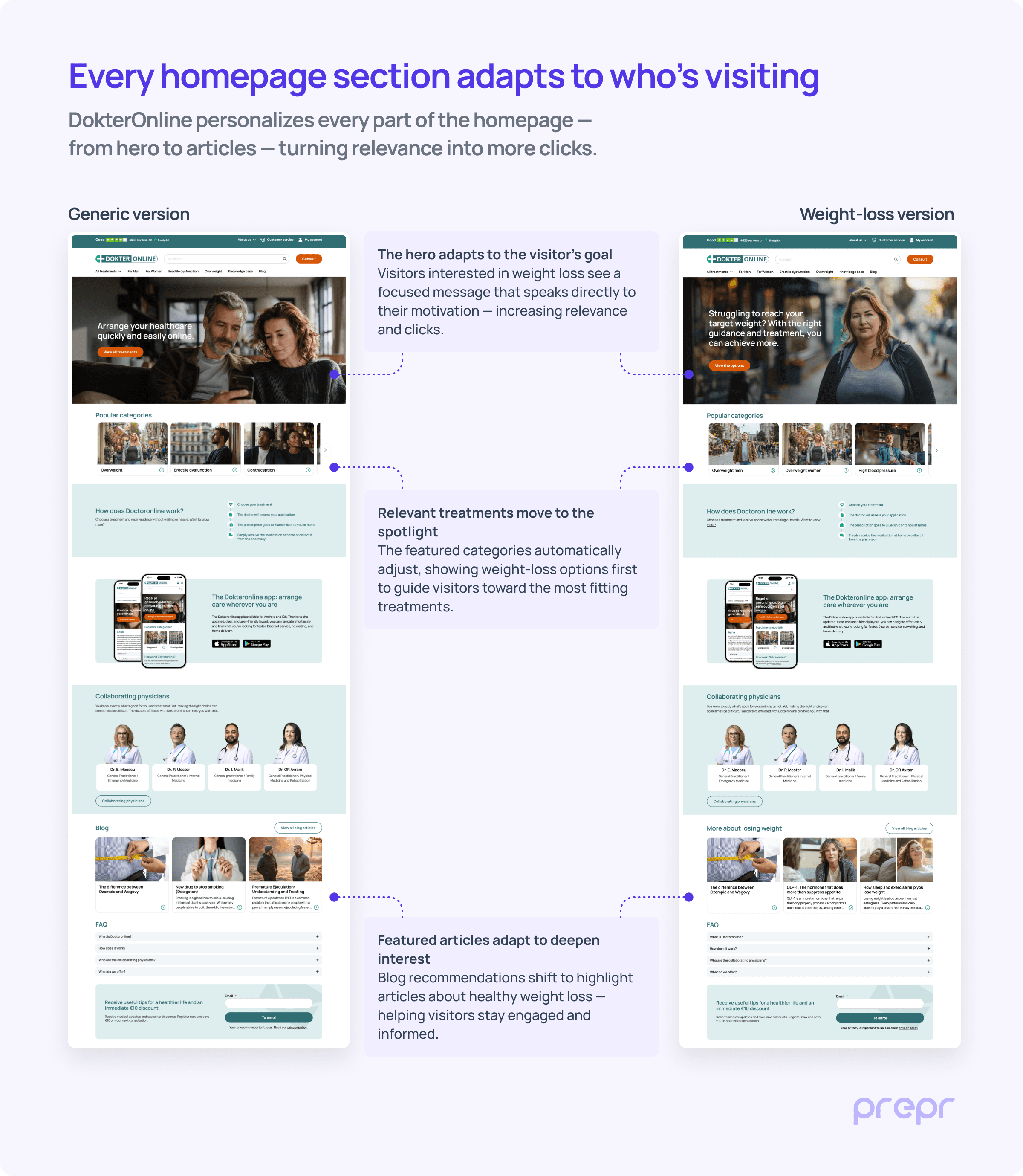
Visitors interested in weight loss see a focused hero image, weight-loss treatments move to the spotlight, and related articles surface first. Someone exploring contraception or STI care sees a different set of elements. Every section stays consistent with the medical tone of the platform, but speaks more directly to the visitor’s intent.
As Niels Nijens, Software Architect, notes: “The advantage of Prepr is that you can start small. It’s built into the CMS, so content marketers can work with it too.”
How the team personalized the homepage in Prepr
After defining the segments together, the team needed a simple way to deliver the right content to the right visitor. Prepr makes this possible directly inside the CMS.

Prepr collects simple behavioral signals, which pages someone visits, which topics they read about, or which campaign brought them in. Based on this behavior, visitors are added to one of the segments that the team defined earlier. No sensitive personal data is used; segmentation is driven entirely by what people do on the site.
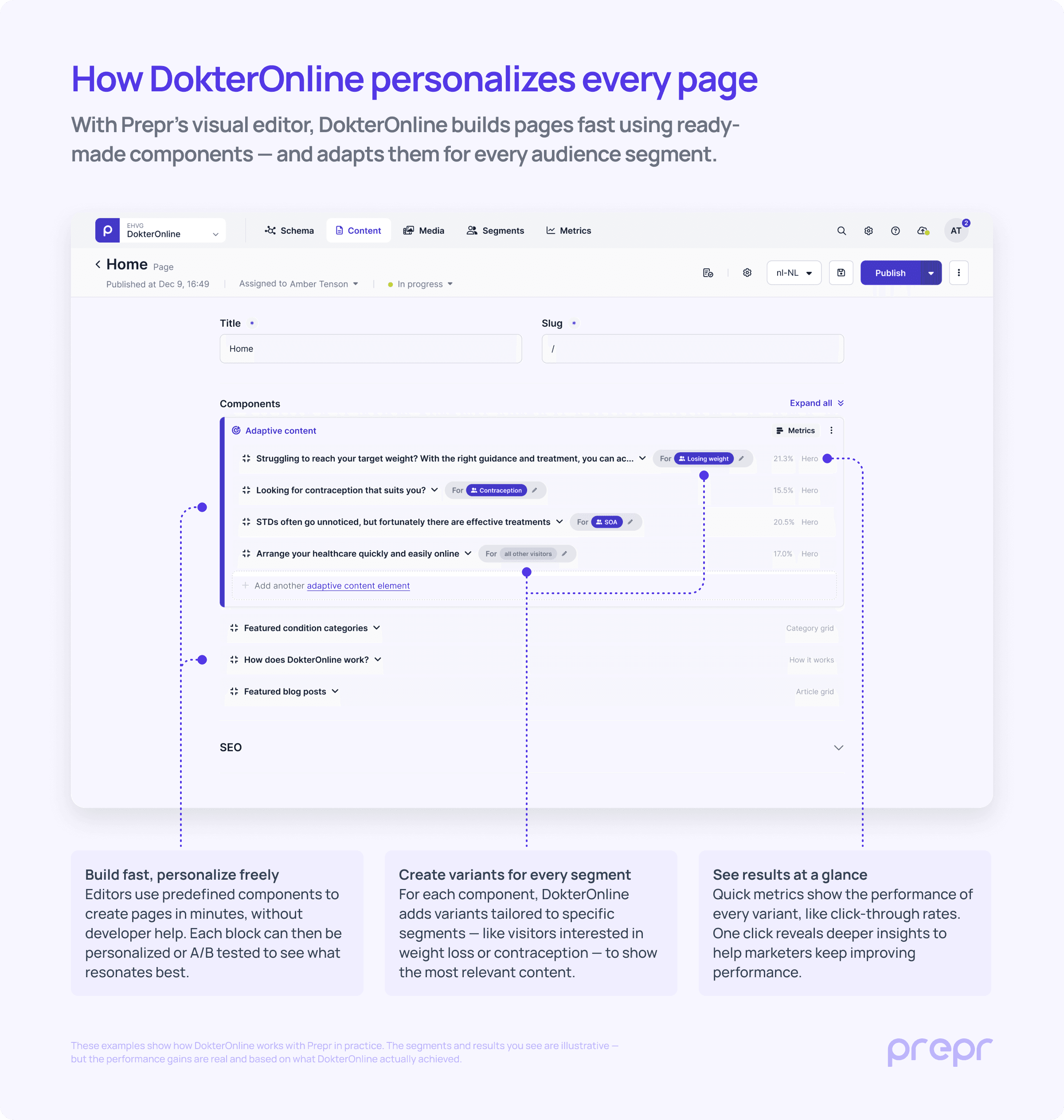
Once segments are in place, editors use Prepr’s adaptive content to personalize the homepage. They create a component once, for example, the hero or a list of recommended articles, and then add different versions for each segment. Prepr shows all variants side by side, making it easy for editors to write, compare, and fine-tune the message for each audience.
When a user visits the page, Prepr identifies which segment they fall into and instantly returns the right version of each component. Because this runs server-side, the personalized homepage appears immediately, without flashes or delays. Editors stay fully in control. They decide which elements adapt, which remain general, and how subtle the personalization should be.
Technical insights: How personalization was implemented
DokterOnline runs personalization in Nuxt, with Prepr handling the logic server-side. At first, personalization was applied only in the browser, so visitors saw a generic homepage on the first load. Moving the logic to server-side rendering fixed this and ensured the right version appears immediately.
Each request now includes a small profile context that Prepr uses to return the correct component variant. This required updating caching rules so each segment has its own cached version.
Tracking was added early in the process to measure performance and support ongoing optimization. The team also introduced a preview flow so editors can check personalized variants before publishing.
Because segmentation, delivery, and analytics all run inside Prepr, the setup stays lightweight, and the team works comfortably with its GraphQL API and editor interface.