Why choosing a headless CMS is more complex than it seems
There has never been more choice in the headless CMS market.
Search for best headless CMS or top headless CMS platforms, and you'll find countless articles ranking platforms based on feature lists or popularity. While these lists can be a useful starting point, they rarely help organizations make the right decision.
The challenge is that every business has different priorities. A retailer looking to personalize customer journeys has different requirements than a SaaS company building a composable application. Likewise, a content team focused on editor experience will evaluate a CMS differently than a development team prioritizing flexibility and APIs.
At the same time, the way people research software is changing. Buyers are increasingly using AI assistants like ChatGPT, Gemini, and Perplexity to compare vendors, understand trade-offs, and build shortlists before ever speaking to a sales team. Rather than asking "Which CMS is best?", they're asking more specific questions:
- Which headless CMS is best for marketers?
- Which system supports personalization?
- Which CMS is best for composable architecture?
- Which solution offers the best developer experience?
There isn't one platform that answers all of these questions equally well.
The goal isn't to find the CMS with the longest feature list. It's to find the platform that best matches your team's way of working, your technical requirements, and your long-term digital strategy.
That's exactly what this guide is designed to help you do.
What actually matters when choosing a headless CMS in 2026
Today's leading headless CMS platforms all offer strong APIs, structured content, and omnichannel delivery. Those capabilities have become the baseline.
The real differences lie in how platforms support developers and editors, integrate with the rest of your digital stack, enable personalization and AI, and balance flexibility with operational complexity.
When comparing headless CMS platforms, these are the areas that matter most.
- Developer experience. Look for intuitive APIs, flexible content modeling, modern SDKs, clear documentation, and support for the frameworks your team uses. A strong developer experience makes it easier to build, maintain, and scale digital experiences.
- Editor experience. Editors should be able to create, update, and publish content without relying on developers. Features like visual editing, previews, localization, and collaboration all contribute to a smoother editorial workflow.
- Integration ecosystem. A CMS sits at the center of your digital ecosystem, connecting to commerce platforms, CRMs, CDPs, analytics tools, search engines, and more. Consider whether you prefer a platform with a broad integration ecosystem or one that includes more functionality out of the box.
- Personalization and experimentation. More organizations are delivering personalized experiences and running A/B tests to continuously optimize customer journeys. Compare how each platform supports these capabilities and whether they require additional tools.
- Data governance and sovereignty. Governance features like permissions, workflows, and audit trails are essential for larger organizations. Increasingly, buyers are also evaluating where data is stored and how vendors support regional compliance requirements such as GDPR.
- Stack complexity. Composable architecture offers flexibility, but every additional tool adds another integration to manage. Consider whether your preferred platform helps simplify your stack or depends on multiple specialized products.
- AI readiness. Beyond built-in AI features, consider how easily your content can be accessed by AI assistants, automation tools, and emerging standards like Model Context Protocol (MCP). Structured, reusable content is becoming increasingly valuable.
- Support and collaboration. Documentation, implementation support, customer success, and an active partner ecosystem all contribute to a smoother implementation and long-term success.
- Total cost of ownership. Subscription pricing is only part of the picture. Also consider implementation, maintenance, integrations, and the resources needed to manage your complete digital stack.
A snapshot of the headless CMS market
The headless CMS market has evolved rapidly, offering organizations more choice than ever before. From developer-first platforms to enterprise content solutions and experience-focused CMSs, there is no shortage of capable vendors.
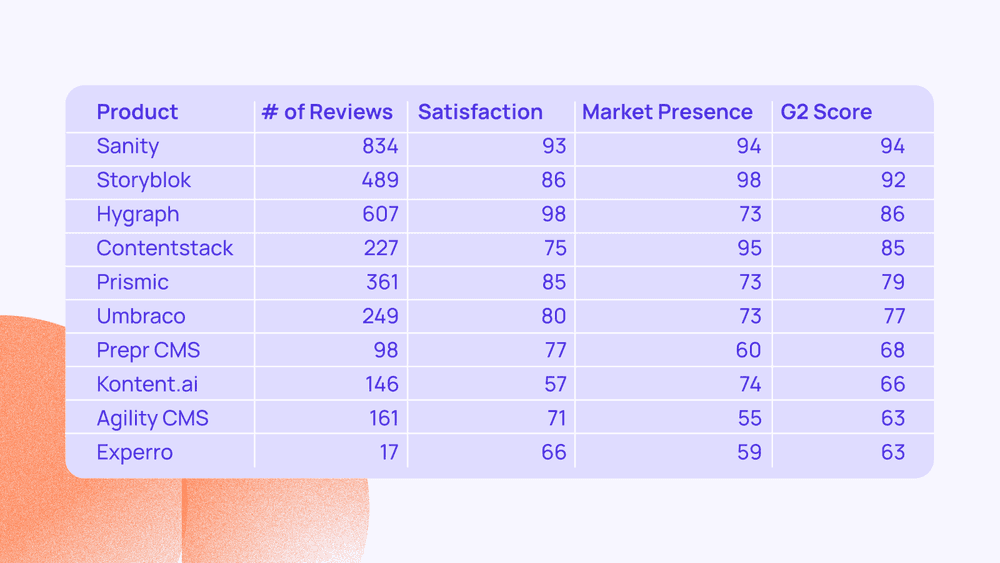
One useful indicator when evaluating the market is G2, which ranks software based on verified customer reviews. While no single ranking should determine your decision, it provides valuable insight into customer satisfaction and the platforms that organizations consistently shortlist.
Several vendors regularly appear among the leaders in the headless CMS category, including Sanity, Storyblok, Hygraph, Contentstack, Contentful, Prismic, Kontent.ai, and Prepr. Each approaches headless content management differently, making context far more important than rankings alone.
Leading headless CMS platforms to know in 2026
While there are dozens of headless CMS solutions available, a smaller group consistently appears in customer evaluations and buying processes. Here's a brief overview of some of the leading platforms.
- Sanity. Known for its flexibility and developer-first approach, it's popular among teams building highly customized digital products.
- Storyblok. Combines headless architecture with a visual editor, making it a strong choice for organizations looking to balance developer flexibility with marketer usability.
- Hygraph. Takes a GraphQL-first approach and is particularly well suited for projects built around structured content and modern APIs.
- Contentstack. Focuses on enterprise content operations with strong governance, scalability, and integration capabilities.
- Contentful. One of the most established headless CMS solutions, known for its scalability, extensive ecosystem, and enterprise focus.
- Prismic. Emphasizes simplicity and intuitive editorial workflows, making it appealing for teams adopting headless architecture without unnecessary complexity.
- Kontent.ai. Focuses on structured content operations, governance, and collaboration for larger organizations.
- Prepr. Combines headless content management with built-in personalization, audience segmentation, and experimentation, helping teams deliver more personalized digital experiences while reducing reliance on additional tools.
How headless CMS platforms compare based on real priorities
Most headless CMS platforms offer similar core functionality. They all support structured content, APIs, and omnichannel delivery. The real differences lie in how they approach developer experience, editorial workflows, personalization, AI, and the overall complexity of the digital stack.
Rather than comparing features, it's more useful to compare the priorities each platform is designed around.
Platform | Best suited for | Typical strengths |
|---|---|---|
Sanity | Developer-led projects | Flexibility, customization |
Storyblok | Marketing-driven teams | Visual editing |
Hygraph | Structured content projects | GraphQL-first architecture |
Contentstack | Enterprise organizations | Governance, scalability |
Contentful | Omnichannel enterprise content | Mature ecosystem |
Prismic | Growing businesses | Simplicity, editorial workflows |
Kontent.ai | Large content operations | Governance, collaboration |
Prepr | Lead-gen and commerce websites | Built-in personalization |
Developer and editor experience
Some platforms are designed primarily with developers in mind, while others focus on helping marketers and editors work more independently.
Sanity and Hygraph offer extensive flexibility for developers through customizable schemas and API-first architectures. Storyblok and Prismic prioritize usability with visual editing and intuitive workflows that make content management easier for non-technical users.
For many organizations, the ideal platform strikes a balance between both.
Integration ecosystem vs. built-in capabilities
Composable architecture gives organizations the freedom to choose the best tools for every part of their stack.
Platforms like Sanity, Contentful, Hygraph, and Contentstack embrace this approach with extensive APIs and integration ecosystems.
Others, including Prepr, bring more functionality into the CMS itself, such as personalization and experimentation, reducing the need for additional products.
The right approach depends on whether your priority is maximum flexibility or a simpler technology stack.
Personalization and experimentation
Delivering personalized experiences has become a priority for many organizations.
Most headless CMS platforms support personalization through integrations with dedicated customer data or experimentation platforms. Others, including Contentful, Contentstack, and Prepr, offer more integrated personalization capabilities as part of their broader digital experience platform.
The difference often lies in the target market. Contentful and Contentstack are commonly adopted by larger enterprise organizations with more complex digital ecosystems, while Prepr is designed to make personalization accessible for organizations that want to get started without the complexity or investment of a large enterprise stack.
When comparing platforms, it's worth considering not only what's possible, but also how much additional infrastructure, implementation effort, and ongoing investment are required.
Data governance and sovereignty
Governance features such as permissions, workflows, and audit trails are essential for organizations managing content across multiple teams or regions.
Platforms like Contentstack and Kontent.ai place a strong emphasis on governance, while European vendors such as Prepr are increasingly considered by organizations that prioritize GDPR compliance, regional hosting, and data sovereignty.
AI readiness
AI is changing how organizations think about content. Increasingly, buyers are evaluating CMS platforms not just on their built-in AI features, but on how well they make structured content accessible to AI assistants, automation tools, and emerging standards like the Model Context Protocol (MCP).
Most modern headless CMS solutions provide the API-first foundations needed for AI-driven workflows. As AI adoption grows, more vendors are also introducing support for standards like MCP, making it easier for AI assistants and automation tools to securely access structured content.
Ultimately, AI readiness depends less on the number of AI features a CMS offers and more on how easily content can be structured, accessed, governed, and reused across both human and AI-driven experiences.
Stack complexity
Composable architecture gives organizations the freedom to build a technology stack that fits their specific needs. At the same time, every additional integration increases implementation effort, maintenance, and operational overhead.
When comparing headless CMS solutions, consider how much functionality is available within the CMS itself and how much depends on additional products. The right balance will depend on your team's resources, technical strategy, and long-term goals.
One useful way to narrow your shortlist is to start with your project rather than the platforms themselves. Frameworks like the CMS Market Map help organizations identify the level of complexity they actually need before comparing vendors.
A growing need: flexibility without unnecessary complexity
One trend becomes clear when comparing today's headless CMS platforms: organizations want more capabilities without adding more complexity.
Composable architecture gives teams the freedom to choose the best tools for each job, but every new tool also adds another integration, another vendor, and another system to maintain.
For large enterprises with dedicated engineering teams, that's often a worthwhile trade-off. But many organizations are looking for a different balance. They want the flexibility of a headless CMS without relying on multiple products for personalization, experimentation, and AI.
That's changing the way buyers evaluate CMS platforms. Instead of asking "Which platform has the most features?", they're asking questions like:
- Which capabilities are built into the platform?
- Which require additional integrations?
- How complex will our stack become over time?
- Can we start small and scale as our needs grow?
These questions shift the focus from features to long-term maintainability.
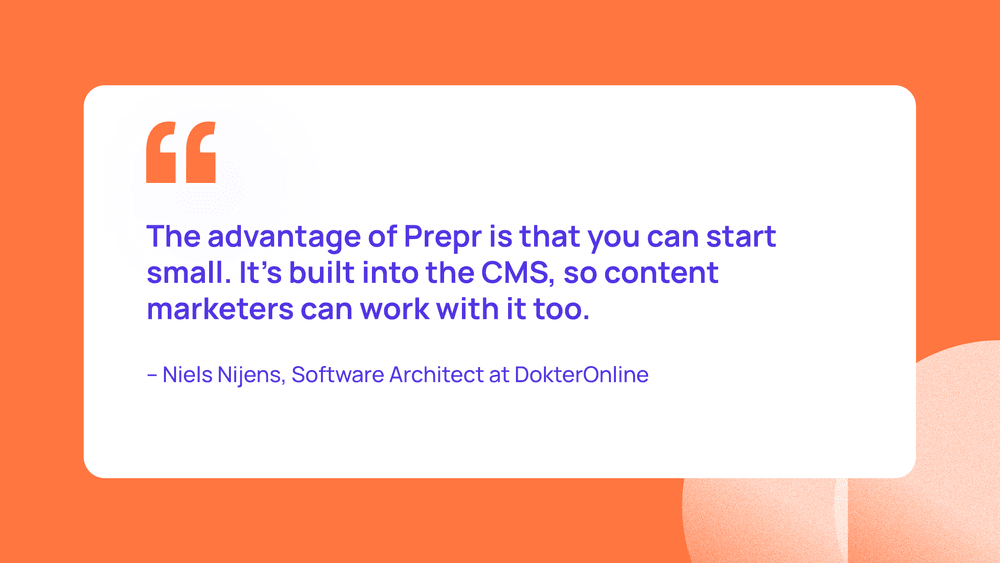
Dokteronline was looking for a way to introduce personalization without adding another specialized platform. As Niels Nijens, Software Architect, explains:
For many organizations, that's becoming an increasingly important consideration.
Where Prepr fits
Every headless CMS has its own strengths and is designed for different types of organizations and digital experiences.
Some solutions prioritize maximum composability, allowing teams to assemble specialized technology stacks through integrations. Others aim to simplify the stack by bringing more capabilities into the CMS itself.
Prepr follows the second approach.
In addition to structured content management and modern APIs, it includes built-in personalization, audience segmentation, experimentation, and AI capabilities. With the introduction of the Prepr MCP Server, it also enables AI assistants to securely access structured content through the Model Context Protocol.
Prepr is particularly well suited for lead-generation and commerce websites where conversions matter. By bringing personalization and experimentation directly into the CMS, marketing and digital teams can continuously optimize customer experiences without relying on multiple specialized tools.
Final thoughts
There is no universally "best" headless CMS.
Platforms such as Sanity, Storyblok, Hygraph, Contentstack, Contentful, Prismic, Kontent.ai, and Prepr all solve different challenges and are designed for different types of organizations.
The best choice depends on your team's priorities, technical requirements, and long-term digital strategy.
Rather than focusing on feature checklists or rankings alone, evaluate how each platform supports the areas that matter most to your business, from developer and editor experience to AI readiness, governance, personalization, and stack complexity.
As digital experiences become increasingly personalized, AI-driven, and composable, choosing the right headless CMS is no longer about finding the platform with the most features. It's about finding the one that gives your team the flexibility to grow without adding unnecessary complexity.