
Marketers are investing more than ever in targeting the right people with the right campaigns. According to eMarketer, global digital ad spend surpassed $600 billion in 2023, with B2B companies increasing their investment in precision channels such as paid search, account-based marketing (ABM), and social advertising.
At the same time, Gartner reports that marketing teams are now running more campaigns across more touchpoints than ever before, with campaign personalization topping the list of priorities.
Yet despite this level of investment, conversion rates remain stubbornly low. According to Unbounce’s 2024 Benchmark Report, the median landing page converts only 6.6% of visitors. HubSpot similarly finds an average of 5.89% across industries, with anything above 10% considered strong performance.
That means well over 90% of your carefully targeted audience never takes the next step. When you think about the energy that goes into building audiences, segmenting them, and delivering highly personalized ads or emails, that number feels painfully inefficient.
So where does the disconnect happen?
Where the story breaks: the conversion gap
Most marketing stories end too soon….
And the problem isn’t the targeting, but it’s what happens after the click.
Marketers spend weeks designing the perfect campaign: the right audience, the right creative, the right message. When the click finally comes, it feels like success. But the click is not the finish line. It’s the starting line of the customer’s real journey.
And yet, for many organizations, everything falls flat after the click. Campaigns often direct buyers to dedicated landing pages, and those pages do their job, converting about 5% of visitors. But that still leaves 95% who don’t take action right away. That doesn’t mean they’re not interested; more often, it means they’re not ready to commit yet. Many of these visitors continue exploring other parts of the website, or they return later when they’re ready to learn more.
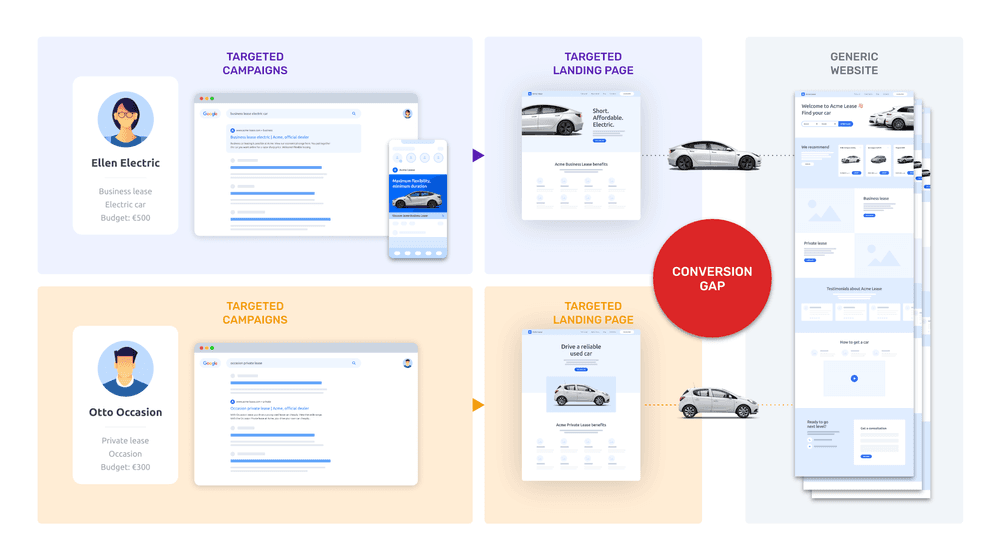
The real problem begins here, because the website they find is generic and disconnected from the campaign narrative. The story told before the click disappears the moment they arrive.
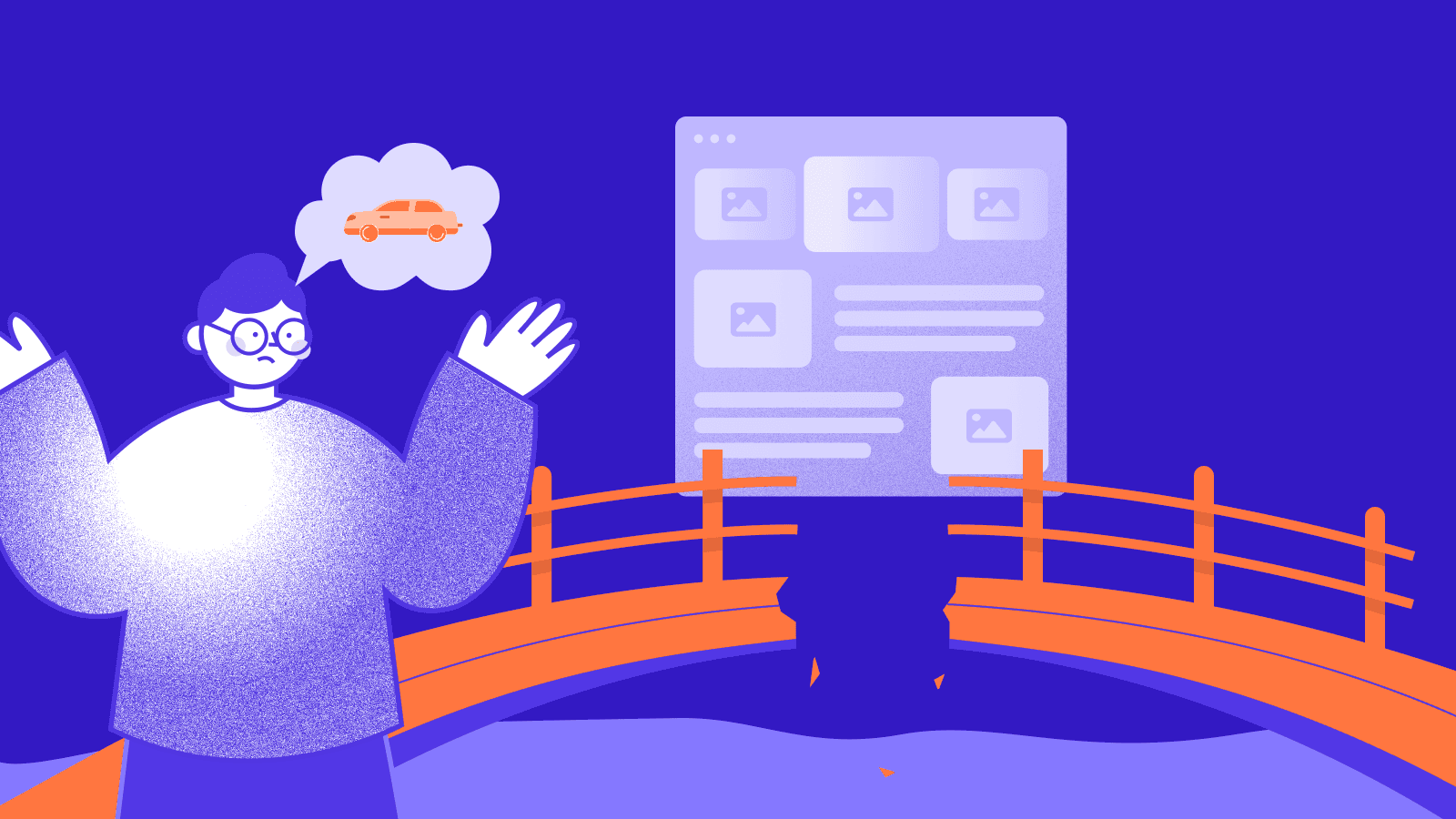
This disconnect is what we call the conversion gap: the space between a personalized campaign and a static website.
Instead of feeling understood, visitors are forced to reorient themselves. They click on an ad promising industry-specific insights but end up on a homepage with a one-size-fits-all value proposition.
The result is lost momentum. Visitors drift away. And marketers are left wondering why the cost-per-lead is so high when the campaign targeting looked perfect on paper.
Why landing pages alone aren’t enough
In response, many marketing teams have doubled down on building landing pages. The logic makes sense: if we can control the first touchpoint after the click, we can align the visitor’s expectations and increase conversion. And in many cases, landing pages do perform better than sending all traffic to the homepage.
But most B2B buyers don’t stop at the landing page.
Research shows that buyers complete around 70% of their buying journey before ever engaging with a salesperson. That means the majority of their decision-making happens independently, often by exploring your website, comparing claims, and seeking out case studies and proof points. In fact, 62% of buyers review 3–7 pieces of content before speaking to sales, and 82% consume at least five assets from the vendor they ultimately choose.
This means that while landing pages play an important role in capturing initial attention, they rarely support the broader exploration buyers demand. By design, landing pages are narrow and transactional, offering a single path forward rather than guiding visitors through the wider journey they want to take.
This is where the conversion gap widens.
Visitors step off the landing page and into the static, generic environment of the full website. The context and personalization built into the campaign and the landing page vanish.
But even with the best infrastructure, landing pages only solve part of the problem. What’s really needed is a connected experience that carries personalization from the campaign into the entire website.
Closing the conversion gap with adaptive website
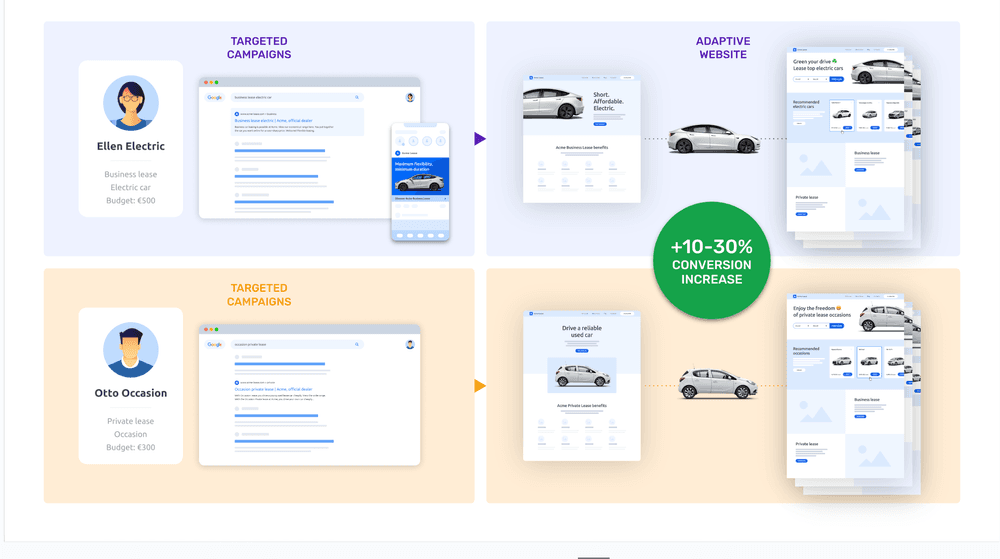
An adaptive website is built to do what static websites cannot: extend campaign personalization beyond the click. Instead of treating the website as a fixed destination, it adjusts dynamically to a visitor’s intent, context, and stage in the journey. That means the narrative doesn’t end once someone leaves a landing page. Whether a visitor arrives through paid media, email, or an ABM initiative, the website continues the story with relevant messaging, proof points, and calls-to-action that reflect who they are and what brought them there.
This continuity is powerful.
Organizations that have adopted adaptive websites often see 10–30% increases in conversion rates, because the experience feels like a natural extension of the campaign rather than a disconnected step. Instead of encountering the same generic homepage, each visitor experiences a tailored journey that evolves with their relationship to your brand.
For many teams, this shift goes hand-in-hand with modern website personalization strategies and the use of conversion rate optimization tools that connect directly with their CMS. Choosing a data-driven headless CMS helps marketers bridge the gap by enabling smarter decisions, more flexible content delivery, and deeper personalization at scale.
We’ve written more about what makes adaptive websites so effective and why they’re becoming a core part of modern marketing strategies, you can explore that perspective here.
Beyond campaigns: How adaptive websites power every channel
The real strength of an adaptive website comes from the way it integrates with the marketing systems you already use. Rather than being a static endpoint, the site becomes a continuation of your campaigns, shaping the visitor’s experience in real time with the data you already have.
- Email campaigns no longer end at the inbox. The personalized nurture flows continue on the website, ensuring recipients see relevant content aligned to the email they opened.
- Paid campaigns benefit from higher ROI, because the expensive traffic is met with equally personalized web experiences.
- Social campaigns retain narrative continuity. Visitors who click on a product launch post see features spotlighted on the website.
- ABM efforts are amplified, as the costly precision of account targeting is mirrored on-site with role- and industry-specific content.
- CRM/CDP integrations turn known visitor data into personalized experiences. Returning prospects see different calls-to-action than first-time visitors, and existing customers see upsell messaging rather than introductory content.
When these elements come together, the website stops functioning as a static brochure. It becomes a living extension of your campaigns, one that adapts, learns, and responds just as much as your marketing does. And because this approach reduces the need to create and maintain hundreds of static landing pages, it also eases operational overhead. If that challenge feels familiar, we’ve shared an article on how landing page personalization and adaptive content can replace the burden of managing thousands of one-off pages.
Building a connected experience
The shift from static websites to adaptive websites requires a mindset change for marketers. For too long, we’ve believed that personalization ends at the campaign. We’ve assumed that the website’s role is to capture leads and convert traffic without considering the continuity of the experience.
But today’s buyers don’t move linearly. They bounce between ads, emails, landing pages, and multiple sections of your website. They expect recognition, relevance, and continuity at every step.
An adaptive website bridges the conversion gap, ensuring that campaigns and websites work together as part of a connected experience.
The belief we need to adopt is clear:
- Old belief: Campaign personalization ends at the click.
- New belief: Campaigns and websites should work together, continuing the conversation and adapting as the relationship develops.
The conversion gap is one of the biggest hidden costs in digital marketing. But it is also one of the biggest opportunities. By making your website adaptive, you don’t just increase conversion rates, but you build trust, relevance, and momentum with every visitor.