Prepr
Product
Why Prepr
Content Management
Personalization
A/B testing
AI and Prepr
Integrations
All features
By use case
Increase conversion rates
Generate better leads
Personalize experiences
Manage multiple websites
Future-proof martech stack
By role
Digital leaders
Marketers
Developers
Content managers
By industry
B2B
E-commerce
Finance
Healthcare
Education
SaaS
Learn about Prepr
Blog
Case studies
Guides & Webinars
Documentation
Support
Pricing
Agencies
Find an agency
Become a partner
Log in
Get a demo
Start for free

Footer

Product

  • Why Prepr?
  • Content Management
  • Personalization
  • A/B Testing
  • AI assisted editing
  • Multi-site support
  • Pricing
  • All features

Use cases

  • Increase conversion rates
  • Generate better leads
  • Personalize experiences
  • Manage multiple websites
  • Future-proof martech stack

Industries

  • B2B
  • E-commerce
  • Finance
  • Healthcare
  • Education
  • SaaS

Integrations

  • Hubspot
  • Salesforce
  • Algolia
  • Shopify
  • All integrations

Resources

  • CMS Market Map 2025
  • Complete Guide to Creating Adaptive Websites
  • Adaptive Website Examples
  • Personalization Planner
  • Blog
  • Guides & Webinars
  • Documentation
  • Status
  • Support

Agencies

  • Find an agency
  • Become a partner

Company

  • About us
  • Careers
  • Sustainability
  • Security & Compliance
  • Privacy
  • Legal notice
  • Terms & Conditions
  • Contact

Product

  • Why Prepr?
  • Content Management
  • Personalization
  • A/B Testing
  • AI assisted editing
  • Multi-site support
  • Pricing
  • All features

Use cases

  • Increase conversion rates
  • Generate better leads
  • Personalize experiences
  • Manage multiple websites
  • Future-proof martech stack

Industries

  • B2B
  • E-commerce
  • Finance
  • Healthcare
  • Education
  • SaaS

Integrations

  • Hubspot
  • Salesforce
  • Algolia
  • Shopify
  • All integrations

Resources

  • CMS Market Map 2025
  • Complete Guide to Creating Adaptive Websites
  • Adaptive Website Examples
  • Personalization Planner
  • Blog
  • Guides & Webinars
  • Documentation
  • Status
  • Support

Agencies

  • Find an agency
  • Become a partner

Company

  • About us
  • Careers
  • Sustainability
  • Security & Compliance
  • Privacy
  • Legal notice
  • Terms & Conditions
  • Contact

Subscribe to our newsletter

The latest updates and articles to learn more about content management.

Location

Jaarbeurs Innovation Mile (JIM)
Jaarbeursplein 6
3521 AL Utrecht, The Netherlands

KvK 54506034 • BTW NL851332390B01

G2 Badges

© 2026 Prepr. All rights reserved.

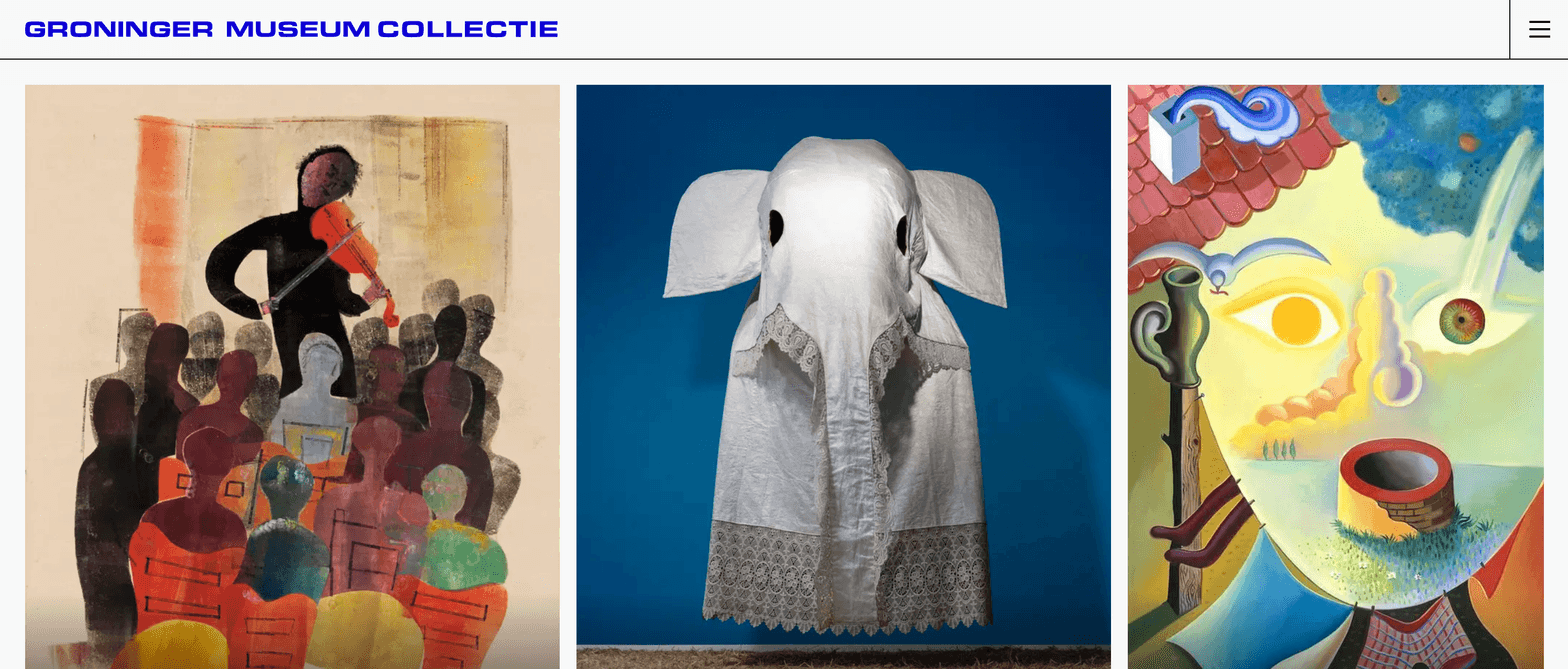
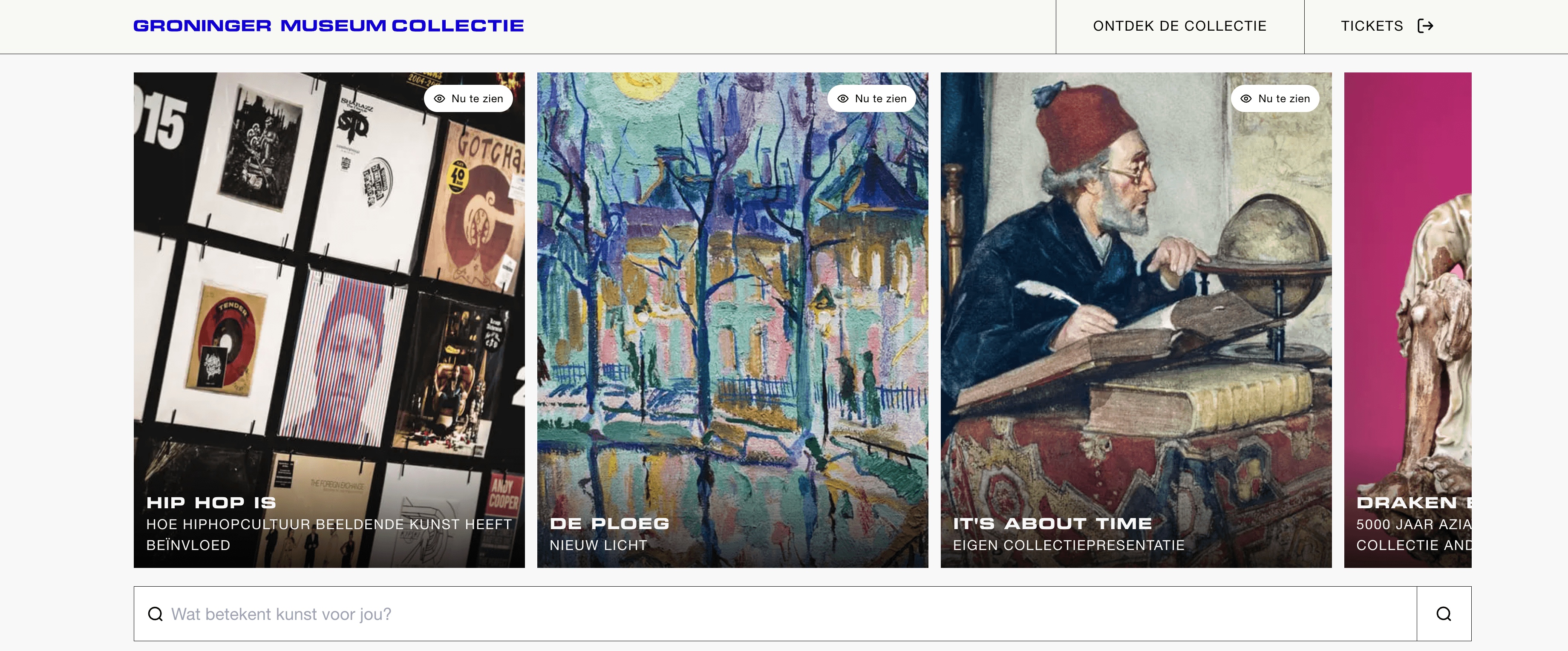
Groninger Museum Collection digital platform showcasing artworks through an AI-powered discovery experience built with Prepr.

Case study

Groninger Museum launches AI-powered digital collection platform with Prepr

With thousands of artworks in its depot, the Groninger Museum set out to make its collection accessible beyond the museum walls. Together with theFactor.e, it launched an AI-powered digital platform for discovering art through themes and visual connections. Prepr powers the content platform behind the experience.
Website
https://collectie.groningermuseum.nl/
Developers
theFactor.e
Framework
Next.js

Technology behind the experience

The platform connects several technologies to make the collection searchable and engaging:

  • Axiell integration – artwork data and images are extracted from the museum’s archive system
  • Prepr – structures and delivers the content powering the digital collection experience
  • Azure Vision – analyzes artwork images to detect visual characteristics
  • OpenAI tagging – generates descriptive tags that connect artworks through themes and concepts
  • Content filtering – ensures the collection remains appropriate for all audiences

Together, these technologies make it possible to explore a collection of tens of thousands of artworks in an intuitive way.

Discovering art through personal interests

During the discovery phase, theFactor.e explored how different audiences relate to museums and art.

Rather than focusing only on traditional museum visitors, the team looked at how people with different levels of interest in art engage with cultural institutions. The research showed that art becomes much more engaging when it connects to people’s personal interests and curiosity.

To support this type of exploration, the platform uses artificial intelligence to enrich the collection data.

Artworks are automatically tagged using everyday language connected to themes and interests, making them easier to search and explore. AI also analyzes images and generates tags that help create unexpected connections between artworks.

This allows visitors to discover objects not only through traditional museum categories, but also through visual similarities and shared themes. Visitors can also leave comments and perspectives on artworks, adding new interpretations and encouraging dialogue around the collection.

All of this comes together in the digital collection platform.
A flexible digital platform powered by Prepr

Together with theFactor.e, the Groninger Museum developed a digital collection platform that allows users to explore artworks intuitively and interactively.

The platform is powered by Prepr, which manages the content and structures the information behind the collection experience. With its headless architecture, Prepr enables the museum to organize artworks, metadata, and editorial content in a flexible way and deliver it seamlessly to the digital platform.

Visitors can browse through artworks, discover related objects through AI-generated tags and explore the collection through themes and interests. The platform also allows visitors to contribute comments and perspectives, creating a more participatory art experience.

Opening the museum depot to a wider audience

Like many museums, the Groninger Museum holds a large part of its collection in storage. With more than 35,000 artworks in its depot, only a small portion of the collection is visible to visitors at any given time.

The museum wanted to make this hidden collection accessible online and reach people who might not normally visit a museum.

The ambition was not simply to digitize the archive, but to create a digital experience that allows people to discover art based on their own interests.

Making art more discoverable

The digital collection platform opens the museum’s depot to a much broader audience. Visitors can now explore artworks online, discover connections between objects, and engage with art through their own interests.

By combining AI technology with a flexible content platform, the Groninger Museum created a new way to interact with its collection, one that makes art more accessible, discoverable, and relevant for a diverse audience.

The Groninger Museum has launched Groninger Museum Collection, an innovative digital platform that makes its art collection accessible to a wider audience. The platform allows visitors to explore tens of thousands of artworks online and discover unexpected connections between objects through artificial intelligence.

Developed together with digital agency theFactor.e, the platform combines advanced search, AI-powered tagging, and an intuitive browsing experience to help people engage with art in a more personal way. Prepr powers the content layer behind the platform, enabling the museum to structure and deliver its collection data in a flexible and scalable way.